Skip to content
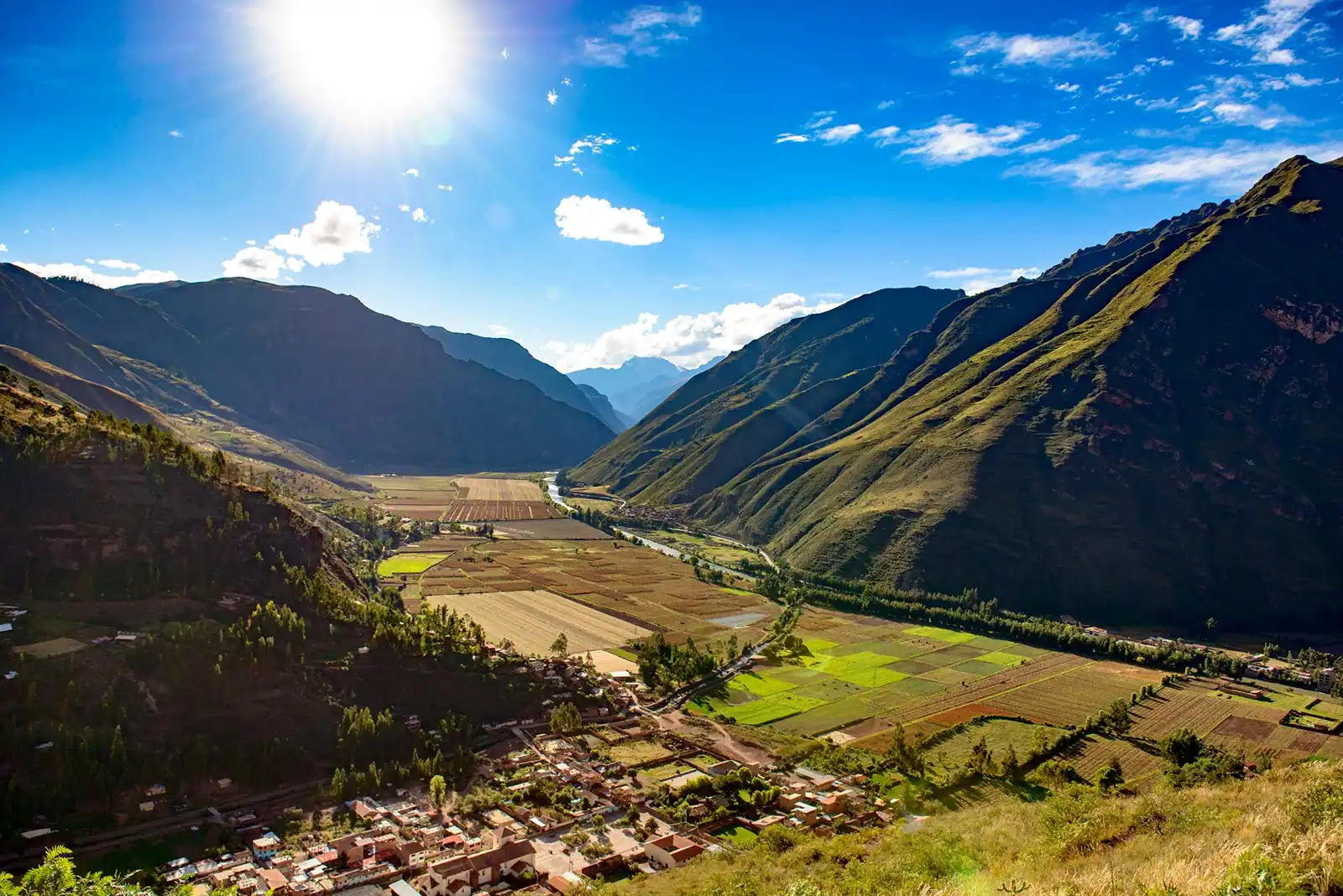
Green fields and mountains of the Sacred Valley near Urubamba
The valley below Cusco

The Sacred Valley of the Incas

The green valley of the Urubamba River below Cusco, lined with Inca terraces, market towns and the living Inca town of Ollantaytambo. Lower than the city and on the way to Machu Picchu, it’s where many trips begin.

The valley

What Is the Sacred Valley?

The Sacred Valley is the stretch of the Urubamba River that runs below Cusco, roughly between the towns of Pisac and Ollantaytambo. For the Incas it was valuable farmland: sheltered by mountains, lower and warmer than Cusco, and good for growing corn. They filled it with terraces, royal estates and ceremonial sites, many of which still frame the fields today.

Now it’s a green, lived-in valley of small towns, farms and markets, with the snowcapped peaks of the Urubamba range above it. Many travelers stay a night or two, because it’s lower than the city and lies on the way to Machu Picchu; others visit on a full day from Cusco.

Above the valley, on the high plateau toward Cusco, lie Chinchero, Moray and the Maras salt pans. They’re often grouped with the Sacred Valley, but they’re a different landscape, higher and drier, as we explain below.

Valley floor
About 2,800–2,900 m9,200–9,500 ft, lower than Cusco
From Cusco
About an hour by roadTo Pisac, at the eastern end
Main towns
Pisac, Urubamba, OllantaytamboChinchero on the plateau above
Train to Machu Picchu
From OllantaytamboNo need to return to Cusco

In the valley

Towns and Inca Sites

Pisac

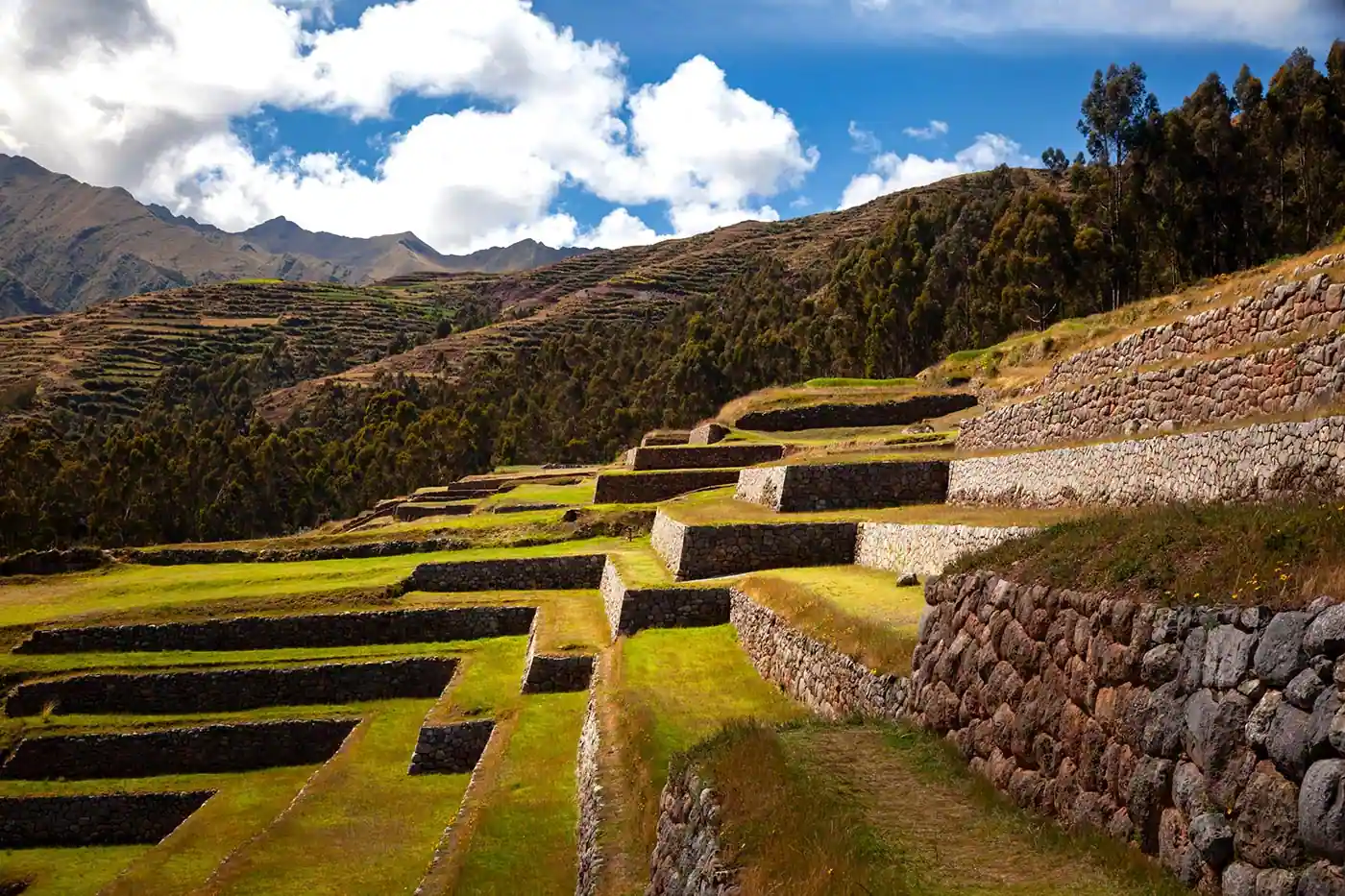
At the eastern end of the valley, Pisac pairs a busy market town with one of the most impressive Inca sites in the region: curved agricultural terraces sweeping up the mountainside to temples and ridge-top buildings high above the river.

Urubamba

In the middle of the valley, Urubamba is the largest town and a practical base, with markets and many of the valley’s places to stay. Most visitors pass through rather than sightsee here.

Ollantaytambo

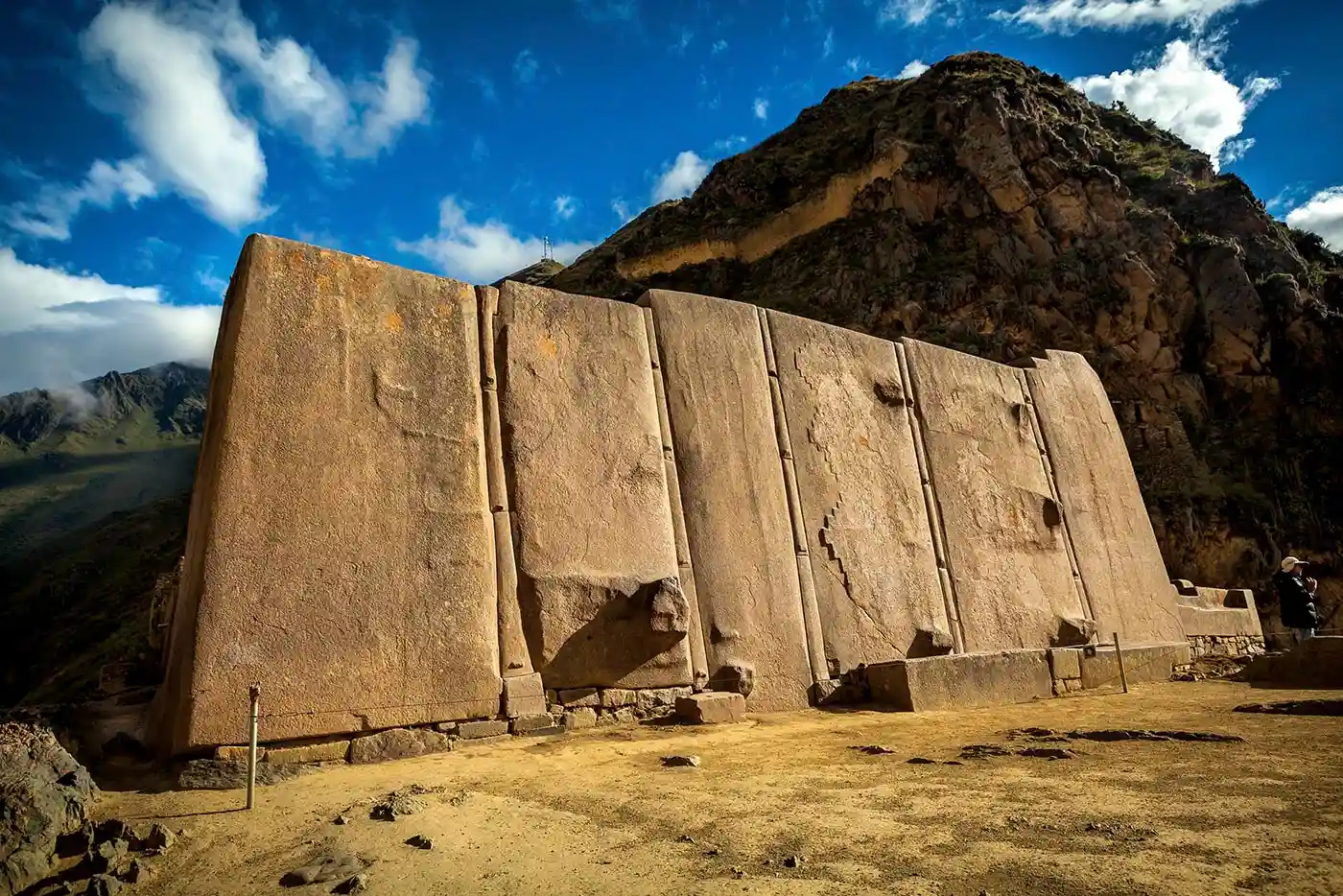
At the western end, Ollantaytambo is a living Inca town: its central streets still follow the original plan, with water channels running beside the stone walls. Above the town, steep terraces climb to a temple complex, and the train station for Machu Picchu is a short walk away.

Chinchero

On the plateau between Cusco and the valley, at about 3,760 m (12,340 ft), Chinchero has a colonial church built on Inca walls, broad terraces and a strong weaving tradition. Many Sacred Valley tours stop here on the way back to Cusco.

On the plateau

Maras and Moray: Above the Valley, Not in It

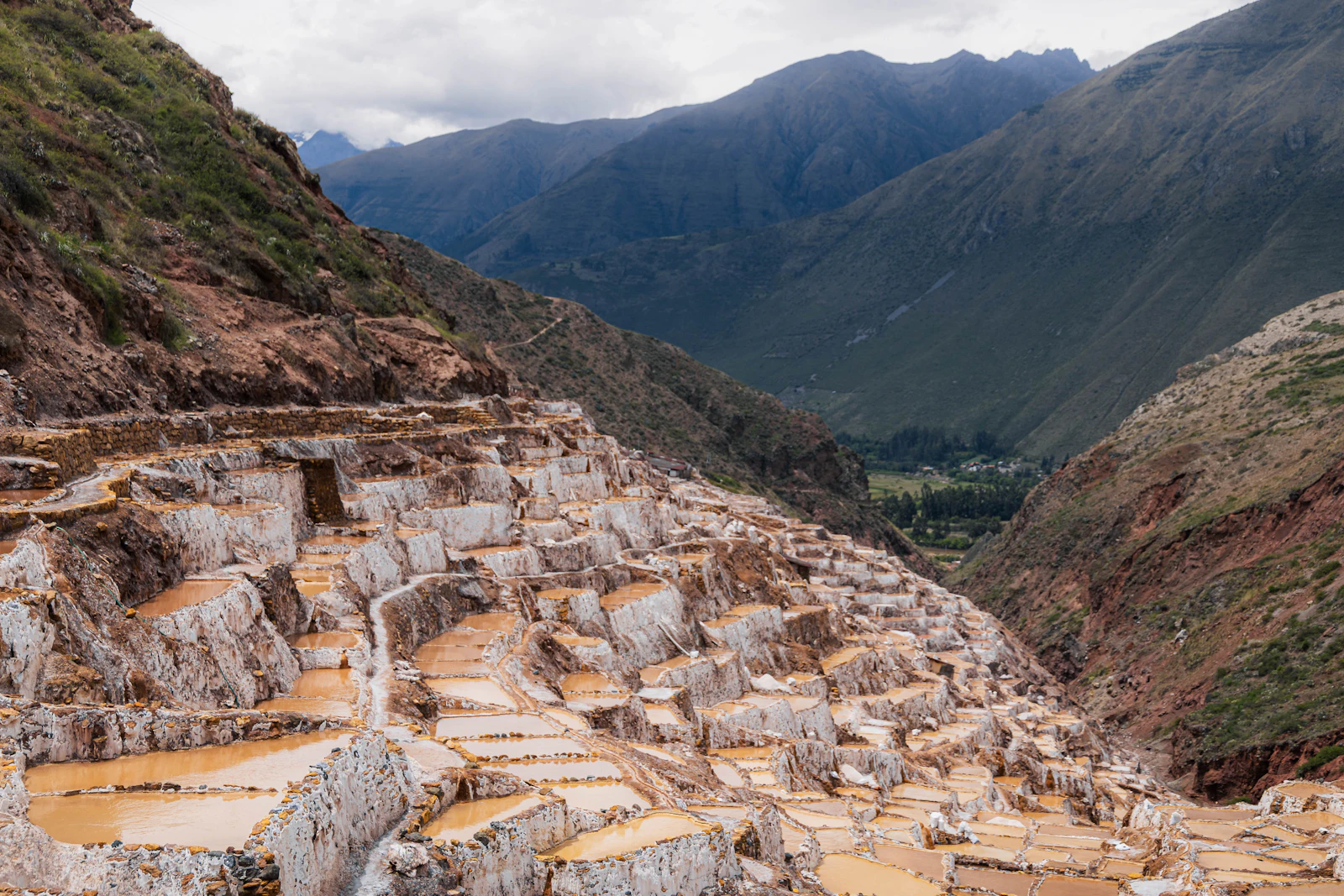
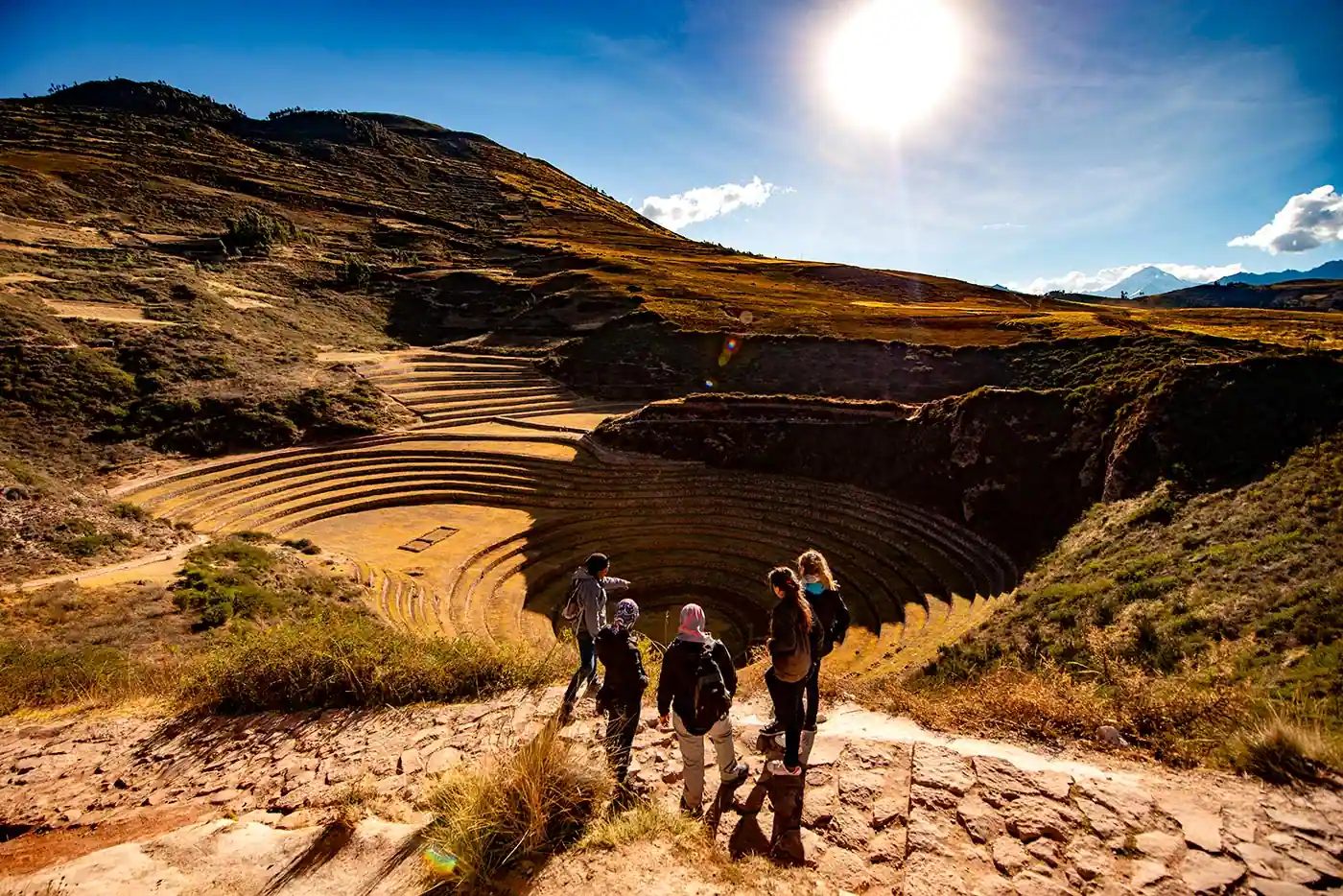
Moray and Maras sit on the high plateau above the valley rather than on the valley floor, and they feel different: open farmland, wide views of the Urubamba range and a drier landscape. At Moray, rings of terraces step down into natural hollows in the ground, a site many researchers link to Inca farming experiments. Nearby, the Maras salt pans cascade down a narrow gorge in thousands of small pools, still worked by local families.

They’re easy to see on a shorter trip of their own; see our Maras, Moray and salt mines tour. Some Sacred Valley programs include them in place of part of the valley route, which we confirm with you when you plan.

Sacred Valley tours

Tours in the Sacred Valley

A full day in the valley, a shorter trip to the plateau, or two days that end at Machu Picchu.

  • Green fields and mountains of the Sacred Valley near Urubamba
    Full Day Day Tour

    Cusco and the Sacred Valley

    Sacred Valley Tour

    A full day in the valley below Cusco: Inca terraces, market towns and the stone streets of Ollantaytambo, with a local guide.
    • Easy
    • Inca sites and towns
    Price On request
  • Circular agricultural terraces of Moray
    Half Day Day Tour

    Cusco and the Chinchero plateau

    Maras, Moray & Salt Mines

    The circular Inca terraces of Moray and the terraced salt pans of Maras, still harvested by local families, on a short trip from Cusco.
    • Easy
    • Terraces and salt pans
    Price On request
  • Stone terraces of the Ollantaytambo fortress in the Sacred Valley
    2 Days Machu Picchu

    Sacred Valley to Machu Picchu

    Sacred Valley + Machu Picchu 2 Days

    A day among the villages and Inca sites of the Sacred Valley, the evening train from Ollantaytambo and Machu Picchu the next morning.
    • Easy
    • Valley day + train
    Price On request

The valley is part of other trips too: the train to Machu Picchu leaves from Ollantaytambo, and the Lares Trek descends toward the valley after its high pass. For more day trips from the city, see our Cusco day tours.

Planning

Planning Your Time in the Valley

Altitude

The valley floor sits at about 2,800 to 2,900 m (9,200 to 9,500 ft), several hundred meters below Cusco, and most people sleep and breathe more easily here. Chinchero and the plateau are higher, at about 3,500 to 3,760 m, but you only pass through them.

A day trip or a night or two?

A full-day tour from Cusco covers the main sites at a comfortable pace. Staying a night or two in the valley lets you slow down, visit Pisac or Ollantaytambo outside the busiest hours and start acclimatizing lower. Many travelers put the valley at the start of their trip and continue to Machu Picchu from there.

Where to stay

Each part of the valley has its own feel. Pisac, at the eastern end, is small and close to Cusco. Urubamba, in the middle, is the largest town, with many of the valley’s hotels spread across the surrounding countryside. Ollantaytambo, at the western end, is the most atmospheric and the most convenient for early trains to Machu Picchu. We’ll suggest where to stay based on the rest of your plans.

Combining it with Machu Picchu

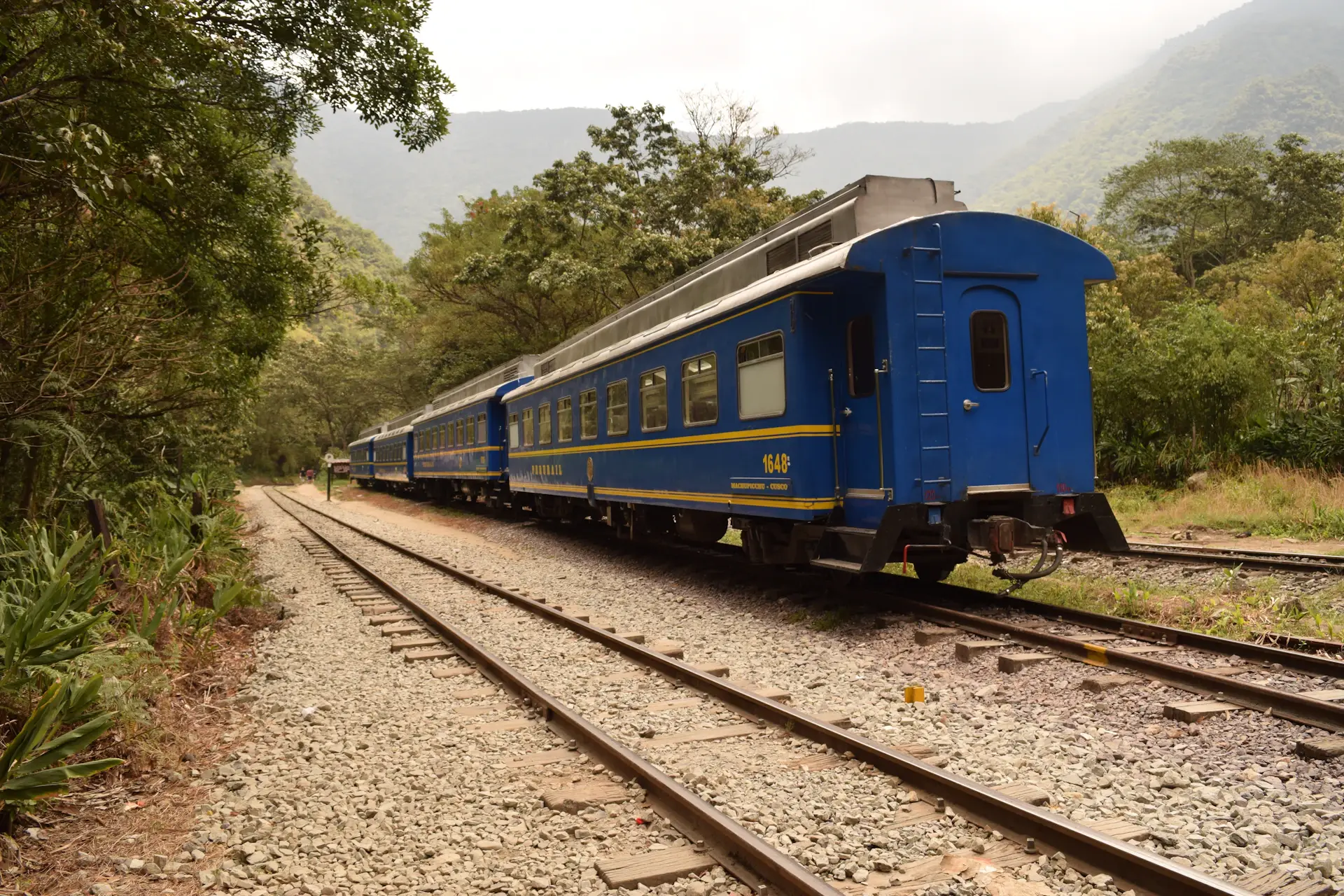
Because the trains leave from Ollantaytambo, the valley and Machu Picchu fit naturally together. Our Sacred Valley and Machu Picchu tour spends the first day in the valley and takes the evening train to Aguas Calientes, with no return to Cusco in between.

Traveling with children

The valley is one of the most family-friendly parts of the region: terraces to climb, markets to wander, an Inca town to explore and a train ride to Machu Picchu. Stone steps and uneven paths are part of every site, so plan shorter visits with small children. Talk with our local team about your children’s ages and we’ll adjust the pace.

Tickets

Pisac, Ollantaytambo, Chinchero and Moray are covered by the Boleto Turístico del Cusco, which offers a partial ticket for the valley sites, sold in person rather than online. The Maras salt pans are run by the local community and charge their own entrance fee. We’ll tell you which tickets your plans need and whether they’re included in your quote.

When to go

The valley is pleasant all year. April to October is dry, with sunny days and cool nights; from November to March, afternoon rain turns the fields their greenest.

Questions

Sacred Valley Questions We Hear Often

How far is the Sacred Valley from Cusco?

Pisac, at the eastern end, is about an hour by road. Ollantaytambo, at the western end, is farther, usually around an hour and a half to two hours depending on the route.

Is one day enough for the Sacred Valley?

A full day covers the main sites comfortably. With more time, a night or two in the valley lets you slow down and adjust to the altitude before Machu Picchu.

Are Maras and Moray part of the Sacred Valley?

They sit on the plateau above it and are often visited together with it, but they’re a separate area. You can see them on a half-day tour or as part of some Sacred Valley programs.

Can I go from the Sacred Valley to Machu Picchu without returning to Cusco?

Yes. Trains leave from Ollantaytambo, and our 2-day Sacred Valley and Machu Picchu tour is built around that connection.

Is the Sacred Valley good for children?

For most families, yes. It’s lower than Cusco, the sites are varied and the distances are short. Tell us your children’s ages and we’ll suggest a pace that works.

Travel Guide

Guides for Your Visit

All Cusco guides
Plan your trip

Add the Sacred Valley to Your Trip

Tell us your dates and whether you’d like a day visit, a night in the valley or the train to Machu Picchu from Ollantaytambo.