Cusco and Machu Picchu welcome visitors from all over the world, and the places that make them special are fragile.
Inca stonework, narrow mountain trails, high Andean grasslands and communities whose daily life continues alongside tourism all feel the effect of how each visitor behaves. Small choices add up.
This page brings together the rules set by Peruvian authorities and the practical habits we recommend. Rules are marked as official and linked to their source; everything else is advice from our team, based on how these places work day to day.
Official rules on this page
Official rules come from Peruvian authorities such as the Ministry of Culture and are linked to their source. They can change, so check them again before you travel.
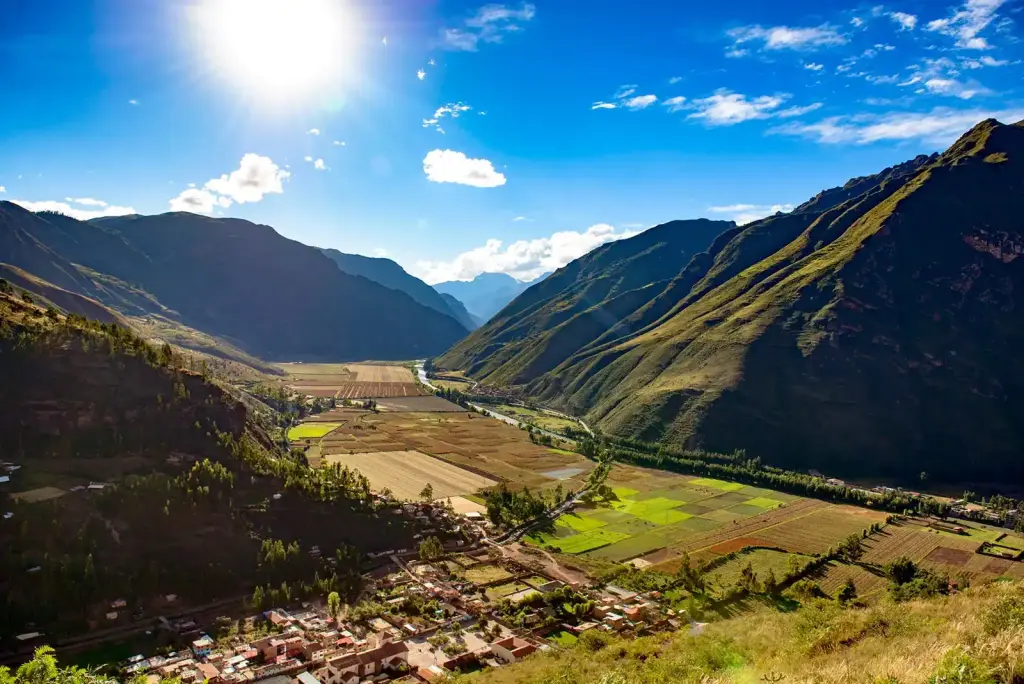
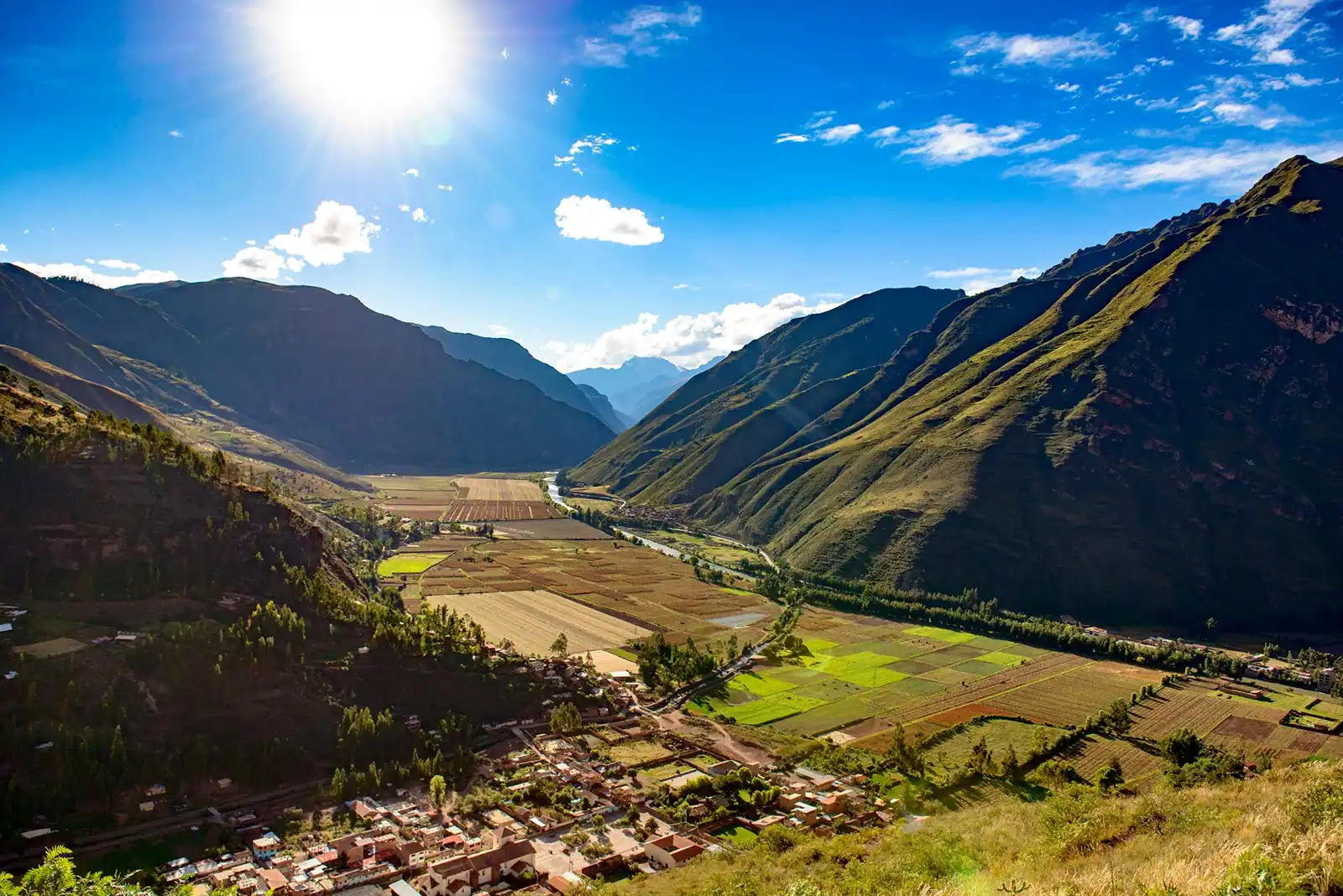
Farmland and mountains of the Sacred Valley near Urubamba.
People
Respect for Communities
Many of the places you will visit are someone’s home, field or workplace. A little awareness goes a long way.
Ask before you photograph people, and accept a no. If someone asks for a small payment for a portrait, agree on it first or put the camera away.
Buy directly from artisans, weavers and producers when you can, and bargain with a smile and a sense of proportion.
Don’t hand out candy, money or gifts to children. Buying a meal or a craft directly supports a family more.
Dress modestly in churches and villages, and keep your voice down during ceremonies and processions.
Learn a few words of Quechua: Allillanchu? (Hello, how are you?) and Sulpayki (thank you) are always appreciated.
Culture
Andean Culture and Sacred Places
For many people in the Andes, mountains, springs and certain rocks are sacred. The high peaks are apus, protective spirits, and offerings to Pachamama, Mother Earth, mark important moments. You may see a guide or a family offer a few coca leaves before a trek begins.
If you are invited to watch or take part, follow your guide’s lead, stay quiet and don’t film unless you are clearly welcome. Celebrations such as Inti Raymi in June and the Corpus Christi processions in Cusco are living traditions, not shows. On the high passes, leave the stone cairns, called apachetas, as you find them.
Inca sites
Protecting Archaeological Sites
Inca sites are protected cultural heritage managed by Peru’s Ministry of Culture. At Machu Picchu, the official rules of conduct say that visitors may not, among other things:
Climb or lean on walls and structures, or touch, move or take stones.
Leave the established circuits and routes.
Bring food, alcoholic drinks, aerosols or sharp objects into the site.
Carry walking sticks, umbrellas, tripods, selfie sticks or other camera supports.
Carry bags larger than 40 × 35 × 20 cm (16 × 14 × 8 in).
Make loud noise, such as shouting, whistling, clapping or singing.
Fly drones or paragliders over the site.
Smoke, vape, light any fire or leave waste of any kind.
According to the Ministry of Culture, breaking these rules can lead to immediate removal from the site without a refund. The same care applies at every Inca site, in Cusco, in the Sacred Valley and along the trails.
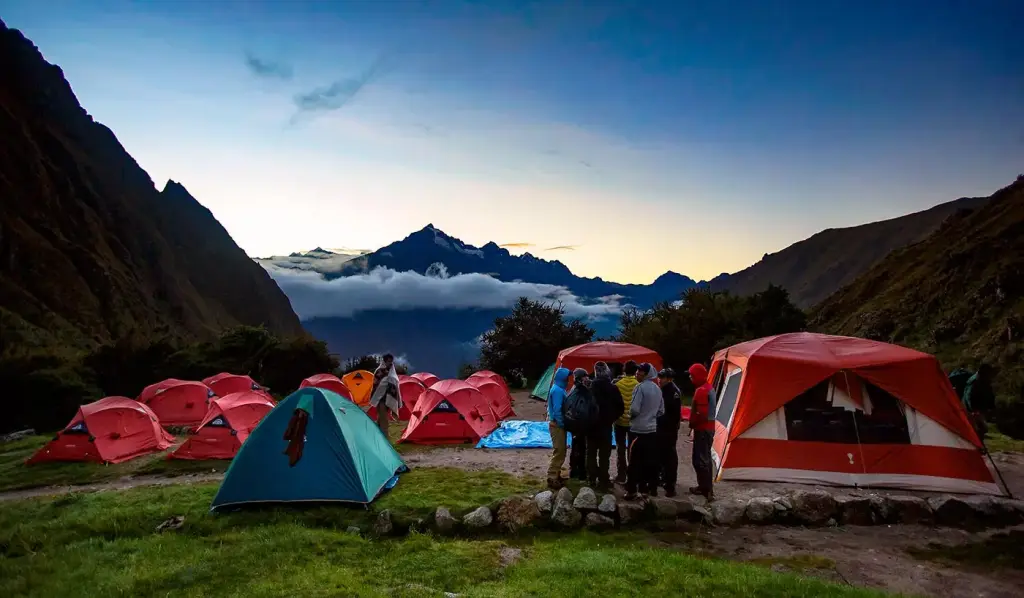
Tents at a campsite on the Inca Trail. Groups may camp only in their assigned campsite.
On the trail
Protecting the Trails
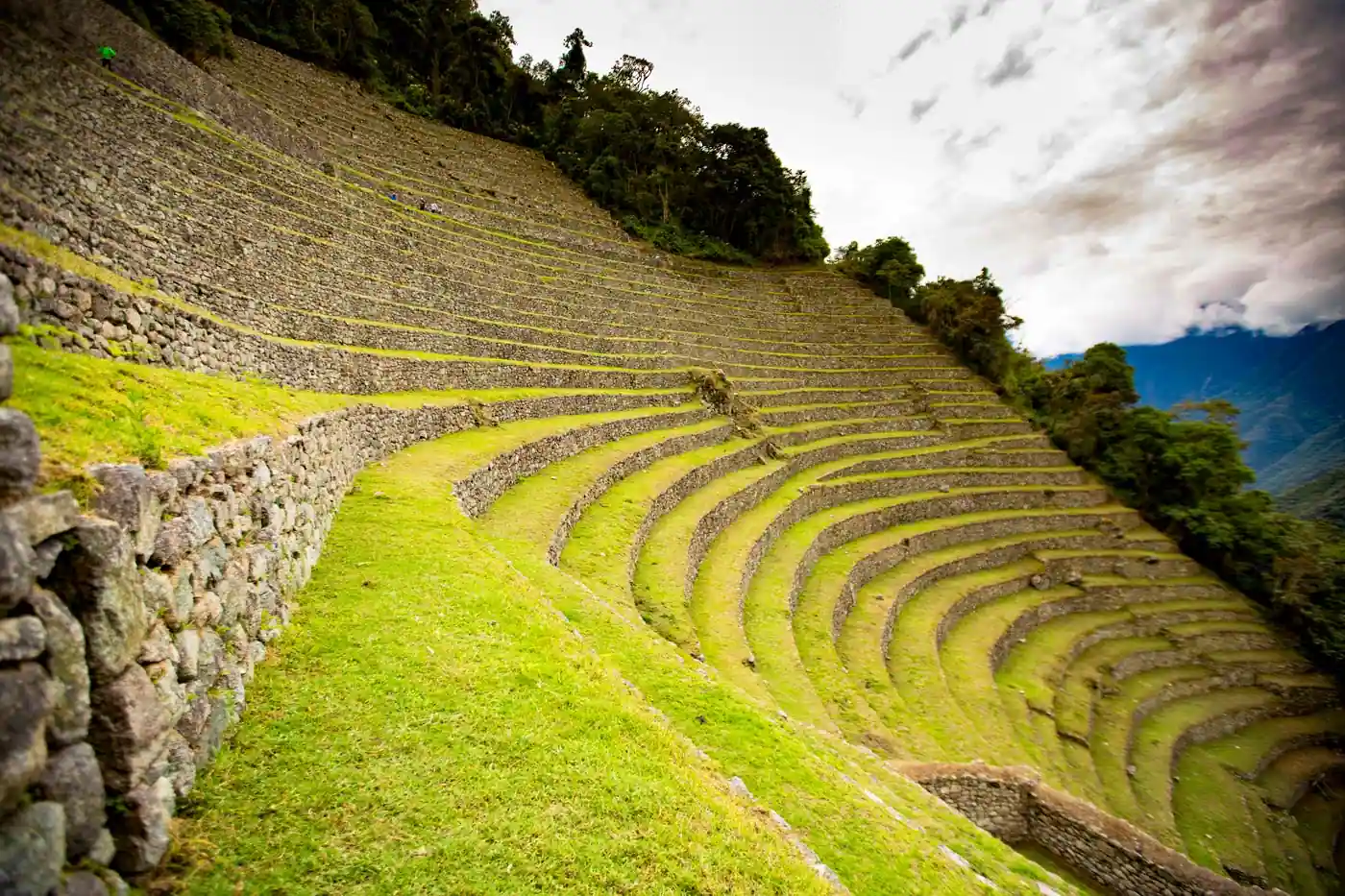
The Inca Trail network is fragile: stone paving, drainage channels and stairways built centuries ago share the mountain with cloud forest and high grassland. Peru’s regulation for the trail network (Ministerial Resolution No. 069-2017-MC) limits the number of people per day, closes the network every February for maintenance and recovery, and lists what hikers may not do. Most of the points below come straight from it:
Stay on the trail and on authorized routes, and don’t cut corners on switchbacks.
Camp only in the campsite assigned to your group.
No campfires anywhere on the trail network.
Don’t climb walls, scratch surfaces or leave graffiti on any monument.
Don’t disturb or collect plants or animals.
Leave glass bottles, alcohol, speakers and drones at home: they are among the items not allowed on the trail.
Use trekking poles with rubber tips. Poles with bare metal tips are not allowed.
Waste
Leave No Trace
Nothing should stay behind: food scraps, wrappers, wet wipes, toilet paper and batteries all go back with you. On the Inca Trail, the regulation makes the travel agencies that operate there responsible for separating waste and carrying it out of the Machu Picchu Historic Sanctuary.
Bring a refillable water bottle instead of buying single-use plastic bottles.
Carry a small bag for your own waste on day hikes.
Use toilets where they exist; elsewhere, follow your guide’s instructions.
Take used batteries and sunscreen tubes home with you.
Nature
Respect for Wildlife and Plants
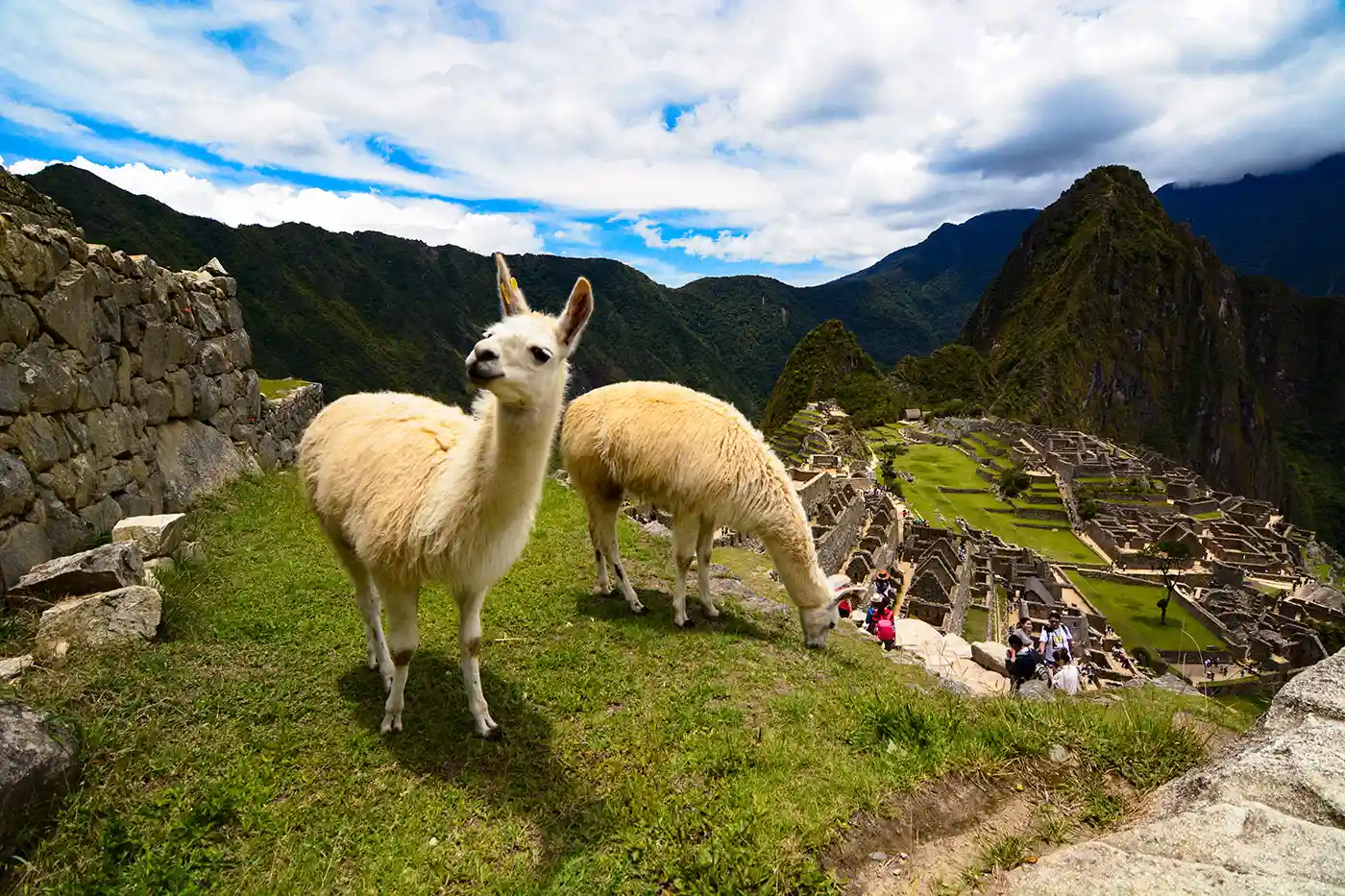
Llamas grazing on the terraces of Machu Picchu, vizcachas on the rocks, condors over the canyons and orchids in the cloud forest are part of what makes the Andes special. The Machu Picchu Historic Sanctuary is a protected natural area as well as a cultural site.
Watch animals from a distance and never feed them. Feeding domestic or wild animals is prohibited at Machu Picchu.
Don’t pick flowers, orchids or other plants, and don’t take seeds or stones as souvenirs.
Keep to the path in the high grasslands, where plants grow slowly and recover slowly.
People on the trail
Fair Treatment of Porters and Trail Staff
Multi-day treks depend on porters, cooks, horsemen and guides, many of them from communities near the trails. Their work is physically demanding and often at high altitude.
Peru’s porter law, Law No. 31614 (2022), recognizes porters as workers with labor rights. Among other things, it sets a maximum load of 20 kg (44 lb) for men and 15 kg (33 lb) for women; requires employers to provide food, suitable clothing, protective equipment and sheltered places to sleep; requires health and work-risk insurance; sets a minimum daily pay; and makes 18 the minimum age for this work.
Pack light and respect the weight allowance you are given for any bag carried for you. Leave what you don’t need at your hotel in Cusco.
Say hello, learn names and treat everyone on the team with the respect you would expect yourself.
Tipping trail staff is a common custom on multi-day treks, but it is always voluntary. If you tip, give it directly and share it fairly across the team.
If something worries you during a trek, tell your guide or contact us.
Before you go
Travel Slower, Plan Better
Some of the most responsible choices are made before you arrive in Peru.
Give yourself time to adjust. Acclimatizing is safer, and you will enjoy every day more. Our Cusco altitude guide explains how.
Travel a little slower. Fewer places and more time in each means less rushing, fewer transfers and more real encounters.
Look beyond the busiest routes. The Inca Trail and Machu Picchu have daily limits for good reason. Treks such as Lares or Salkantay spread visitors more widely: compare them in our guide to alternative treks.
Spend locally. Family restaurants, markets and artisans keep more of what you spend in the region.
Our position
Where We Stand
We ask every traveler to follow these rules, and we plan our trips around them, including realistic pacing with time to adjust to the altitude.
We don’t claim certifications, social programs or environmental labels we don’t have. As we put specific practices in place on our own trips, we will describe them here in concrete terms rather than with slogans.
A practical packing list for the Inca Trail: layers for cold nights and hot days, boots, rain gear, what to rent in Cusco, documents, and what isn’t allowed on the trail.
How high Cusco is, what the altitude feels like, a calm plan for your first 48 hours, why starting in the Sacred Valley helps and how many days to allow before a trek.
Two famous day hikes from Cusco compared: altitude and effort, scenery, crowds, weather and fees, whether to do both, and the quieter 7 Lakes of Ausangate.
6 min read
Plan your trip
Plan a Trip That Feels Right
Tell us how you like to travel. We’ll suggest a pace, routes and timing that suit you and the places you visit.