Short Inca Trail vs Classic Inca Trail: 2 Days or 4?
Two days or four? How the Short and Classic Inca Trail compare on sights, effort, altitude, sleeping, cost and permits, and who each route suits best.
In this guide11 sections
The short answer
Choose the four-day Classic Inca Trail if you want the full journey: high passes, several Inca sites, three nights of camping and a dawn arrival at the Sun Gate. Choose the two-day Short Inca Trail if you have less time, prefer a hotel to a tent or want to stay lower than Cusco. Both end at Machu Picchu, and both need a permit.
The two routes share the same final stretch of original Inca road, past Wiñay Wayna and through the Sun Gate. Everything before that is different: the time you need, the effort, where you sleep and how you first see Machu Picchu. Here’s how to decide, without either route being the “right” answer.
Quick Comparison
| Feature | Short Inca Trail (2 days) | Classic Inca Trail (4 days) |
|---|---|---|
| Start | Km 104, reached by train | Km 82, reached by road |
| Hiking | One full day, about 12 km (7.5 mi) | Four days, about 42 km (26 mi) |
| Highest point | Sun Gate, 2,720 m (8,920 ft) | Dead Woman’s Pass, 4,215 m (13,829 ft) |
| Nights | One hotel night in Aguas Calientes | Three nights camping |
| First view of Machu Picchu | Sun Gate, in the afternoon of day one | Sun Gate, early on day four |
| Machu Picchu visit | Morning of day two | Morning of day four |
| Difficulty | Moderate | Challenging |
| Permit | Separate daily quota | Separate daily quota |
What You See on Each Route
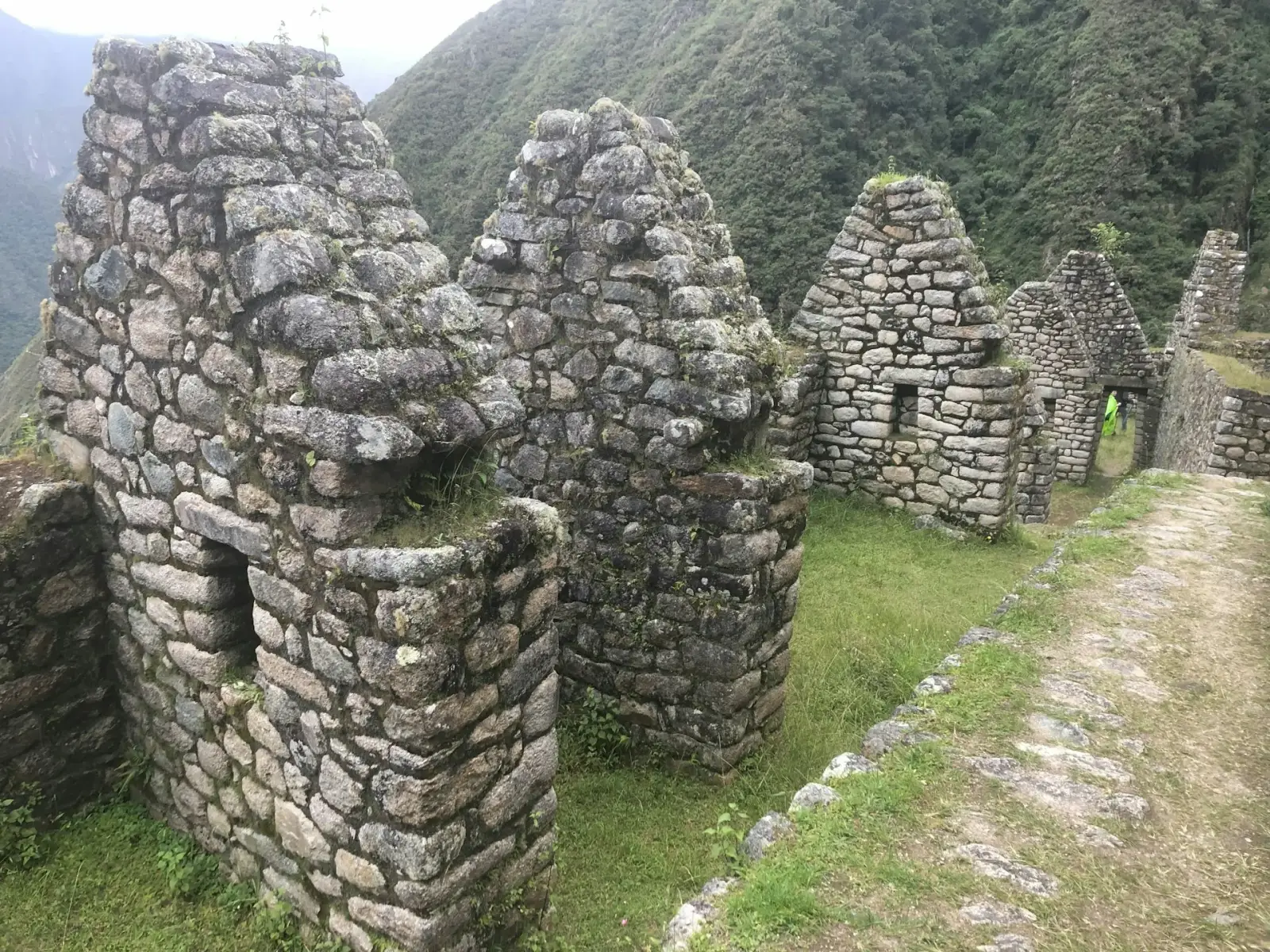
On the four-day route, the trail climbs out of the Urubamba Valley past the terraces of Llactapata, crosses two high passes and threads a chain of Inca sites set on ridges and slopes: Runkurakay, Sayacmarca, Phuyupatamarca and finally Wiñay Wayna. You move from dry valleys to high grassland and into cloud forest full of orchids and ferns. The variety is the point: each day looks different from the last.
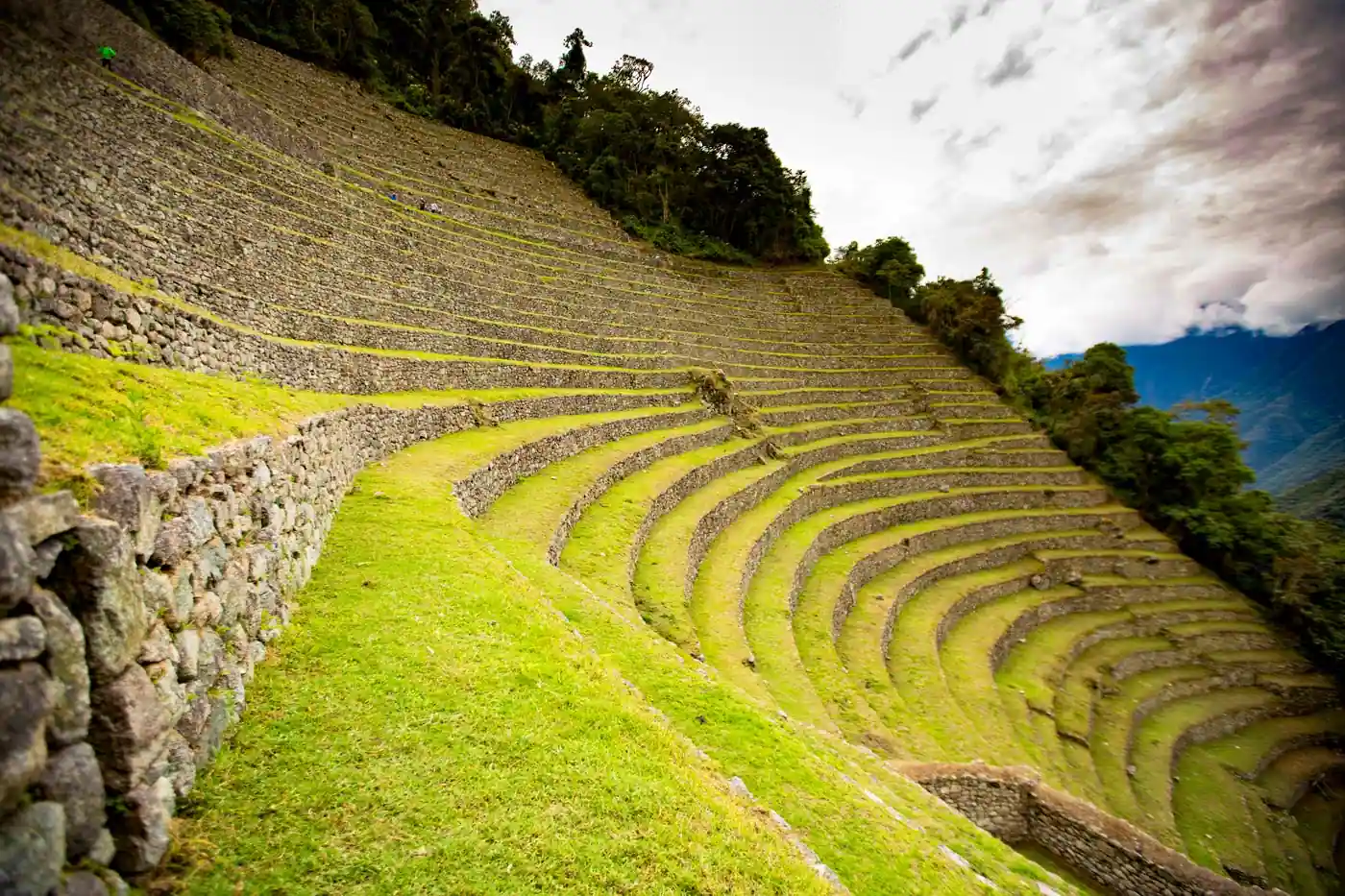
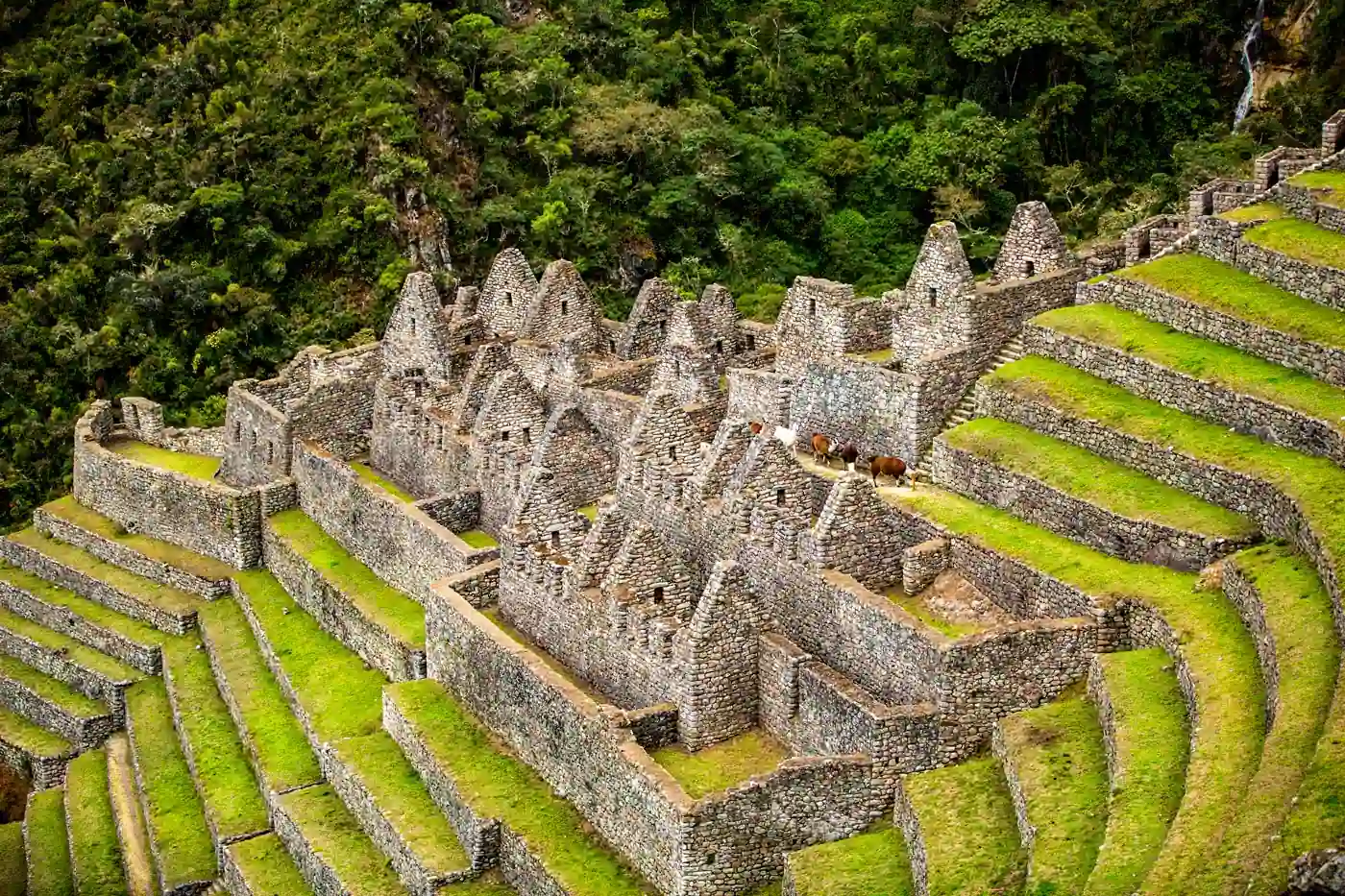
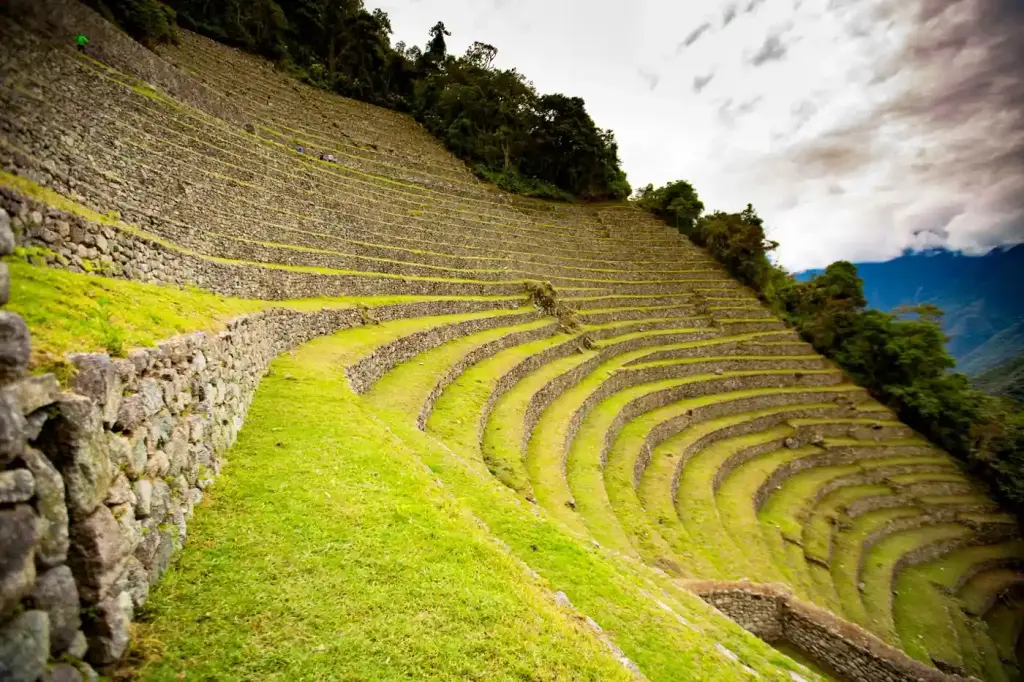
On the two-day route, you start low, near the river, at the small site of Chachabamba, and climb steadily through cloud forest to Wiñay Wayna, one of the most beautiful sites on the whole trail. From there it’s a gentler walk along the mountainside to the Sun Gate. You see less, but what you see is the stretch many people consider the finest.
Effort, Altitude and Sleeping
Effort. The Short Inca Trail is one long day: six to seven hours on your feet, with a steady climb of about 600 m (2,000 ft) on uneven stone in the morning. The classic route asks for four consecutive days, including a hard second day over Dead Woman’s Pass and a long staircase down on day three. Our guide to how hard the Inca Trail is breaks it down day by day.
Altitude. The short route is entirely lower than Cusco, which sits at about 3,400 m (11,150 ft), so most people breathe more easily on it. The classic route spends two days around and above 3,900 m, which is why acclimatizing in Cusco matters so much more for the four-day trek.
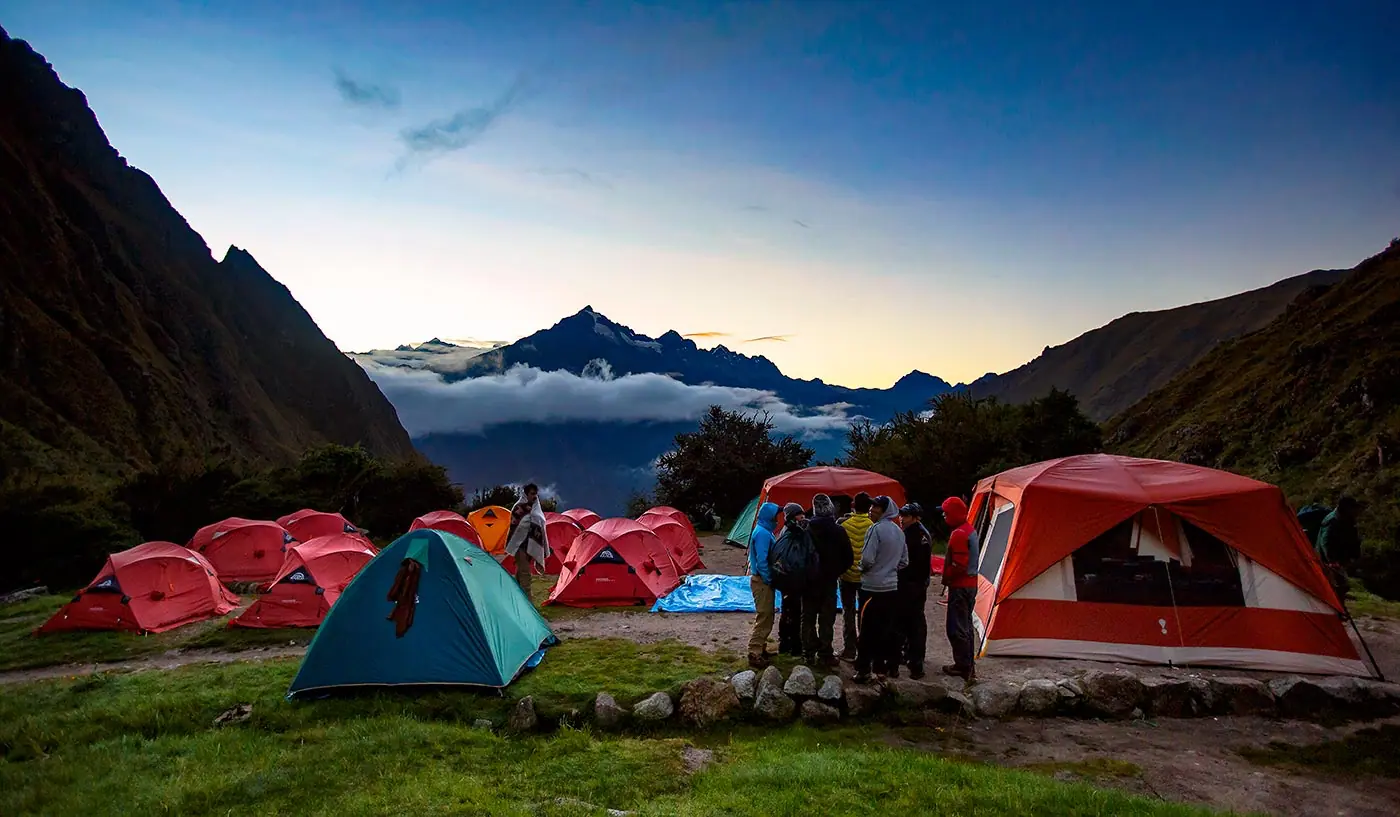
Sleeping. On the Short Inca Trail you shower and sleep in a hotel in Aguas Calientes. On the classic route you camp at official campsites for three nights, with basic shared toilets, no electricity and cold nights at the higher camps, especially from May to September. For some travelers that’s the best part of the trip; for others it’s the reason to choose the shorter route.
Who Should Choose Two Days
The Short Inca Trail is a good fit if:
- You have a short trip and can’t spare four days plus acclimatization.
- You’d like to walk into Machu Picchu through the Sun Gate but don’t want to camp.
- You’re traveling with older children or teens who walk well but aren’t ready for a multi-day trek.
- You’re worried about the altitude, or you arrive in Cusco with little time to adjust.
- The four-day route is sold out for your dates.
Who Should Choose Four Days
The Classic Inca Trail is the better choice if:
- You enjoy multi-day hiking and want the whole journey, not just the ending.
- You’re curious about the Inca sites along the way, which most visitors never see.
- You like the idea of camping in the mountains with a small team that cooks and carries the equipment.
- You want to reach the Sun Gate early in the morning, with the day still ahead of you at Machu Picchu.
- You have at least two or three days in Cusco beforehand to acclimatize.
Cost and Permits
The two-day route usually costs less overall: fewer days, a smaller team and no camping equipment. Our breakdown of what the Inca Trail costs explains what each price includes.
Both routes need an Inca Trail permit, issued by the Ministry of Culture through licensed operators in each hiker’s name and passport. Each route has its own daily capacity: under the trail’s regulation, 500 people a day on the routes from Km 82 and 250 on the route from Km 104, counting guides and support staff. The short route sometimes stays available a little longer, but in peak season both sell out. Both close every February. Our guide to Inca Trail permits explains how far ahead to book.
The Arrival at Machu Picchu
This is the part people ask about most. On the classic route, you leave the last campsite before dawn and walk the last stretch to the Sun Gate in the early light. You then walk down to the citadel for the guided visit the same morning.
On the short route, you reach the Sun Gate in the afternoon of the hiking day, look down on Machu Picchu, and continue to Aguas Calientes for the night. Your guided visit is the next morning, when you return by bus, fresh and rested.
Neither is better. One is the end of a four-day journey; the other is a long, beautiful day followed by an unhurried visit.
How the Days Unfold
| Day | Short Inca Trail | Classic Inca Trail |
|---|---|---|
| 1 | Early train to Km 104, a full hiking day past Wiñay Wayna to the Sun Gate, bus down to Aguas Calientes, hotel night | Early road transfer to Km 82, a gentle first day along the valley, first camp |
| 2 | Early bus up to Machu Picchu, guided visit, train and road back to Cusco | The long climb over Dead Woman’s Pass and the descent to camp |
| 3 | — | A second pass, several Inca sites and cloud forest, last camp near Wiñay Wayna |
| 4 | — | Pre-dawn walk to the Sun Gate, guided visit, train and road back to Cusco |
Fitting Each Route into Your Trip
The Short Inca Trail fits almost any itinerary: two days, lower than Cusco, and easy to combine with the Sacred Valley on either side. You still need a day or two in Cusco first, but it doesn’t demand the long acclimatization of the classic route.
The four-day trek shapes the whole trip around it. You need at least two full days in the region beforehand, ideally three, and a free evening afterward to recover. In return, it becomes the centerpiece of your trip rather than one day among many. Our guide to how many days to spend in Cusco shows a seven-day plan built around it.
Still Undecided?
If you’re torn, think about three things: how many days you have in Peru, whether camping appeals to you, and how the altitude in Cusco feels once you arrive. Or send us your dates and a little about your group, and we’ll give you our honest opinion. You can compare both routes side by side on our Inca Trail tours page.
Frequently Asked Questions
Do both routes end at Machu Picchu?
Yes. Both reach the Sun Gate and include a guided visit to Machu Picchu. On the four-day route the visit is on the last morning; on the two-day route it’s on the second morning, after a night in Aguas Calientes.
Is the Short Inca Trail the “real” Inca Trail?
Yes. It follows original Inca road inside the Machu Picchu Historic Sanctuary and needs the same kind of permit. It’s a shorter section of the same trail network.
Which route is better for families?
For most families, the Short Inca Trail: one hiking day, lower altitude and a hotel night. Active teenagers with hiking experience often enjoy the four-day route.
Can I do the Short Inca Trail if the Classic is sold out?
Often, yes. The two routes have separate daily quotas, so the short route may still have space when the four-day permits are gone.
Do I need to acclimatize for the Short Inca Trail?
The route is lower than Cusco, but you’ll still arrive in Cusco first. Give yourself at least a day or two there before the hike.