How Much Does the Inca Trail Cost? A Clear Breakdown
What makes one Inca Trail price different from another: permits, the route, the support team, what’s included and the extras worth budgeting for, including tips.
In this guide8 sections
The short answer
The cost of the Inca Trail depends mostly on the route (two days or four), the size of the group, how many staff support it and what’s included: permits, the Machu Picchu entry, trains, meals, camping gear and porters. Very cheap offers usually save money on the people doing the work. Compare what’s included, not just the final number.
Ask three companies for an Inca Trail price and you’ll probably get three very different numbers. That isn’t because one of them has found a secret shortcut. The trail has fixed costs that everyone pays, and a long list of choices that make one trip cost more than another. This guide walks through both, so you can read a quote and understand what you’re paying for.
We don’t list prices here. Our own Inca Trail tours are quoted on request, for your dates and group, so the number you see is the one you pay.
Why Inca Trail Prices Vary So Much
Every operator starts from the same base: the government entry fees set by the Ministry of Culture and the cost of getting hikers to the trailhead and back from Machu Picchu. From there, prices move with a handful of decisions.
- The route. The four-day trek involves three nights of camping, a full support team and more meals. The one-day route from Km 104 ends at a hotel in Aguas Calientes.
- Group size. A private trip for two carries the same guide and cook as a group of ten, shared by fewer people.
- The support team. How many porters and cooks travel with the group, and how they’re paid, fed and equipped.
- Equipment and comfort. Tent quality, sleeping mats, a dining tent, toilet tents and the kind of food served on the trail.
- The return journey. Train class and whether the transfer back to Cusco is shared or private.
- Student and child rates. The government fee is lower for eligible students and children, and that difference passes through to the price.
What’s Usually Included
A complete Inca Trail package normally covers everything between your hotel in Cusco and your return. Read the inclusions line by line, because the gaps are where extra costs hide.
- The Inca Trail permit, which includes your entry to Machu Picchu
- A licensed guide for the trek and the visit to the citadel
- The early transfer from Cusco to the trailhead
- Meals on the trail, cooked by the trek cook
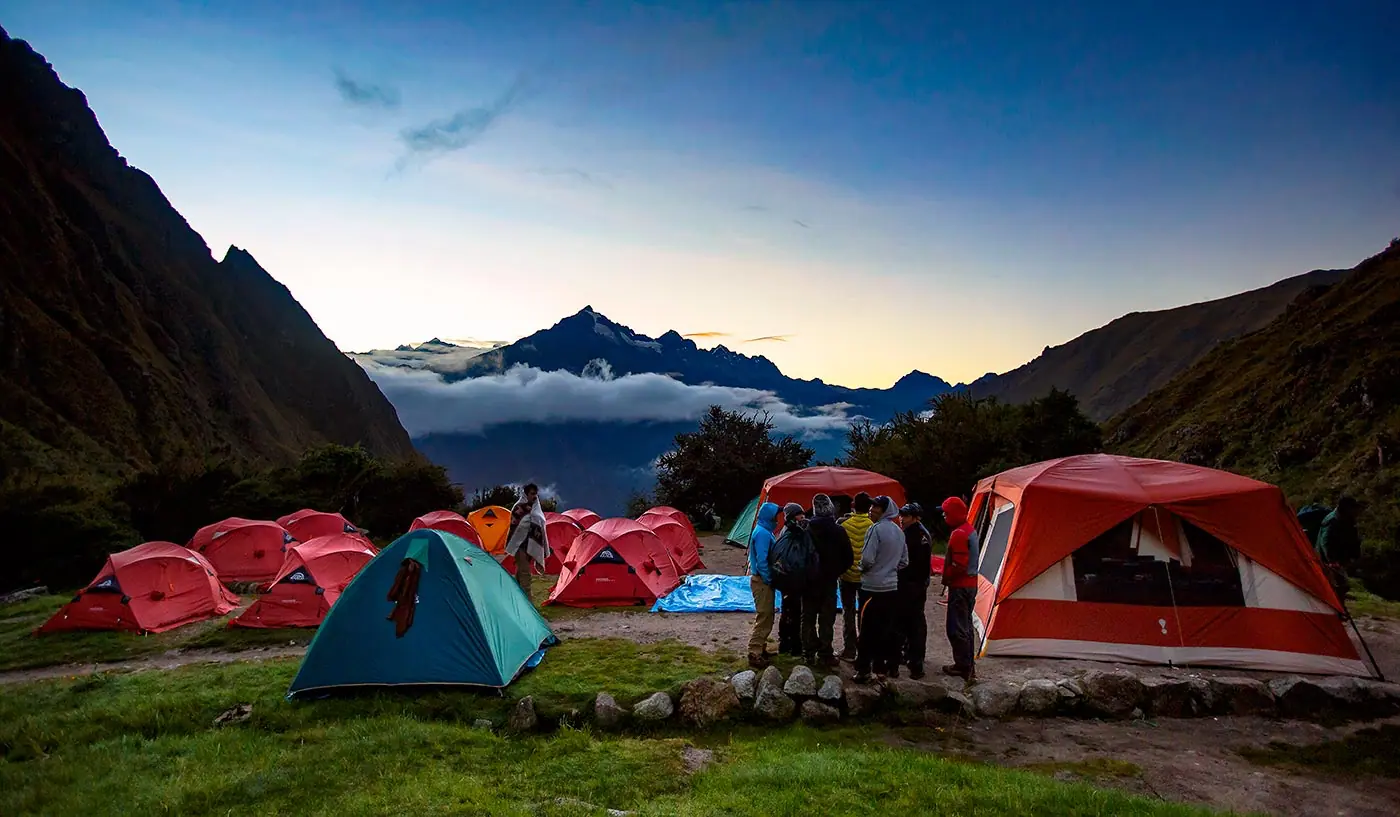
- Tents, sleeping mats and a dining tent on the four-day route
- Porters to carry the group’s camping and kitchen equipment
- The bus down from Machu Picchu to Aguas Calientes
- The train through the Urubamba Valley and the road transfer back to Cusco
On the Short Inca Trail, add one night in a hotel in Aguas Calientes and a second bus ride up to Machu Picchu the next morning. Our Classic Inca Trail and Short Inca Trail pages list exactly what’s included in each.
Extra Costs to Budget For
Even with a complete package, a few costs usually sit outside the price. None of them are large on their own, but together they’re worth planning for.
Gear rental and an extra porter
Most hikers don’t own a four-season sleeping bag or want to fly with trekking poles, so renting them in Cusco is common. On the four-day route, the group’s porters carry the tents and kitchen, not your clothes. If you’d rather walk with a light daypack, you can usually hire an extra porter to carry a set weight of your personal gear. Ask how much weight is allowed before you pack.
Huayna Picchu or Machu Picchu Mountain
The climbs above the citadel are separate routes with their own limited tickets, and they aren’t part of a standard trail permit. After four days of hiking, many people are happy to skip them. If you want one, ask early, because availability is tight and the rules for hikers’ entries changed in 2026.
Train upgrades and the last day
The return train is usually a standard tourist service. Some trains have a higher class with more space and a meal on board, for an extra charge. Lunch in Aguas Calientes on the last day is often not included, and neither are the hot springs.
Hotels, insurance and small things
You’ll need a hotel in Cusco before and after the trek, and a secure place to leave your main luggage while you hike. Travel insurance that covers trekking at altitude and trip cancellation is worth the cost. On the trail, carry some cash in soles for toilets at the trailhead, snacks and bottled drinks at the first campsites.
Tipping on the Inca Trail
Tipping isn’t mandatory, but on a multi-day trek it’s customary, and for porters and cooks it’s a meaningful part of what they take home. A few practical points:
- Ask your operator for a suggested range per team member before the trip, so you can bring the right amount.
- Tip in soles, in small bills. Change is hard to find on the trail.
- Most groups tip on the last evening at camp, either to each person directly or through the guide, with a word of thanks.
- Agree on an approach with the rest of your group, so everyone contributes in a similar way.
On the Short Inca Trail there are no porters or cooks, so the tip usually goes to your guide.
Why Very Cheap Offers Cost More Later
When one price is far below the rest, the difference has to come from somewhere, and it rarely comes from the fixed costs. The usual places are:
- The porters. Pay, food, sleeping equipment and the weight they carry. Peru has a law for porters (Law 31614, which replaced the earlier porter law) that sets their working conditions, and loads are weighed at the start of the trail.
- Group size. Very large groups mean less attention from the guide and a crowded camp.
- What’s left out. A low headline price can exclude the sleeping mat, water, the return train or the bus from Machu Picchu, which you then pay for on the way.
- The campsites. Permits come with assigned campsites, and a far first camp can mean a much longer second day.
Ask every company the same questions: how many porters travel with the group, what they carry, what the group size is, and exactly what’s included on the last day. The answers tell you more than the price.
How we suggest comparing quotes
Put two or three quotes side by side and check the same items in each: permit and Machu Picchu entry, meals on each day, camping gear, porters, water, bus, train class and the transfer back to Cusco. Then add the extras from this guide. The cheapest total and the cheapest headline price are often different offers.
Short vs Classic: How the Cost Compares
The one-day route usually costs less overall, simply because it involves fewer days and a smaller team. The comparison isn’t only about money, though.
| Cost item | Short Inca Trail (2 days) | Classic Inca Trail (4 days) |
|---|---|---|
| Permit | Km 104 route, includes Machu Picchu | Km 82 route, includes Machu Picchu |
| Nights | One hotel night in Aguas Calientes | Three nights camping |
| Team | Guide | Guide, cook and porters |
| Meals | As listed in the itinerary | All meals on the trail |
| Transport | Train to Km 104, bus, train back | Road to Km 82, bus, train back |
| Main extras | Mountain tickets, meals in town | Sleeping bag, extra porter, tips |
If your budget is tight but you want to walk into Machu Picchu through the Sun Gate, the short route gives you the last and most scenic stretch of the trail for less. If the full experience matters more, the four-day trek is worth the difference. Our comparison of two days or four covers the rest of that decision.
When to Book, and Why It Affects the Price
The price itself doesn’t change much with the season, but availability does. Permits for June to August sell out months ahead, and booking late can push you toward a private departure or a different route. Our guide to Inca Trail permits explains the timing, and the guide to the best time to hike weighs weather against crowds.
Frequently Asked Questions
Is the Machu Picchu ticket included in the Inca Trail price?
Yes, in a complete package. The trail permit includes a visit to Machu Picchu at the end of the hike. Huayna Picchu and Machu Picchu Mountain are extra and have their own limited tickets.
Do students pay less?
The government fee has a lower rate for eligible students, so student prices are usually a little lower. You’ll need a valid student card that meets the Ministry of Culture’s rules, and you must carry it on the trail.
How much cash should I bring on the trail?
Enough for tips, toilets at the trailhead, snacks or drinks at the first campsites and lunch in Aguas Calientes on the last day. Bring soles in small bills; there are no ATMs on the trail.
Why do private treks cost more?
A private group still needs its own guide, cook and porters, and the cost is shared by fewer people. In return, you choose the pace and have the guide to yourselves.
Is the sleeping bag included?
Often not. Many companies rent sleeping bags suitable for the cold nights on the trail. Check the inclusions and ask what temperature the bag is rated for.
Official Sources & Updates
Rules, tickets and closures are set by Peruvian authorities and can change. We last checked this guide against these sources on .