How Hard Is the Inca Trail? Difficulty, Altitude and Training
An honest look at the effort: the day-by-day climbs, Dead Woman’s Pass, how the altitude feels, an eight-week training plan and easier ways to reach Machu Picchu.
In this guide9 sections
The honest answer
The Classic Inca Trail is a challenging but achievable trek for people who are used to walking. It covers about 42 km (26 miles) in four days, mostly above 2,500 m (8,200 ft), with one hard day over Dead Woman’s Pass at 4,215 m (13,829 ft) and thousands of stone steps. Fitness helps; acclimatizing in Cusco first helps even more.
People tend to worry about the wrong thing on the Inca Trail. The distance is modest: ten kilometers or so a day is a normal hike for many travelers. What makes it hard is the combination of altitude, steep stone staircases and several full days in a row. The good news is that all three can be prepared for.
Day-by-Day Effort and Altitude
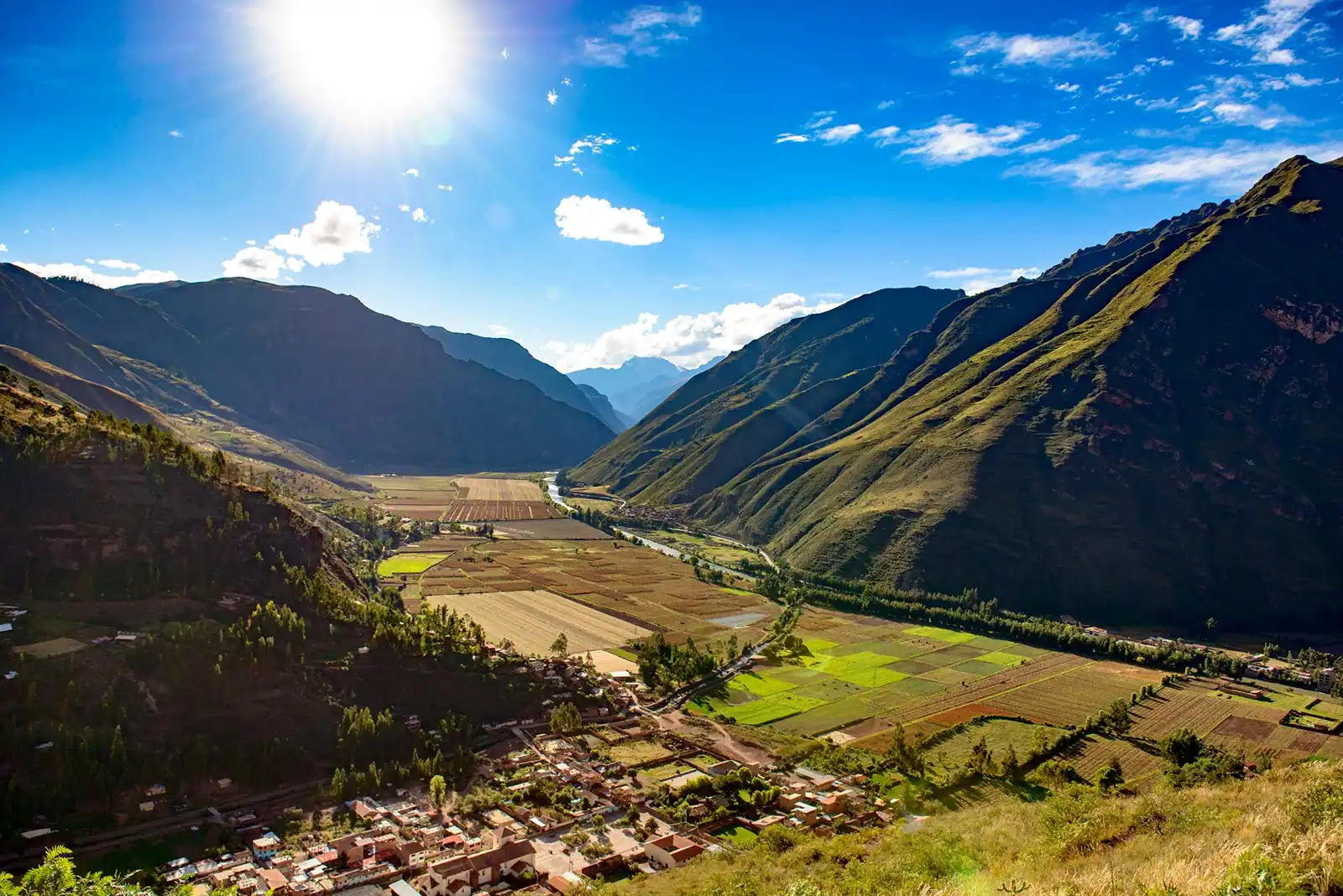
The classic route starts at Km 82 in the Urubamba Valley and ends at the Sun Gate above Machu Picchu. Campsites are assigned with your permit, so daily distances can shift a little, but the shape of the trek is always the same: an easy first day, a very hard second day, a long and varied third day and an early, short fourth day.
| Day | What it’s like | Highest point | Walking time |
|---|---|---|---|
| Day 1 | Gentle, along the valley, past the Llactapata ruins | About 3,300 m (10,800 ft) | 6 to 7 hours |
| Day 2 | A long climb to Dead Woman’s Pass, then a steep descent | 4,215 m (13,829 ft) | 7 to 9 hours |
| Day 3 | A second pass, Inca sites and cloud forest, many steps down | About 3,950 m (12,960 ft) | 5 to 8 hours |
| Day 4 | A pre-dawn start to the Sun Gate and Machu Picchu | 2,720 m (8,920 ft) | 2 to 3 hours, plus the visit |
Dead Woman’s Pass
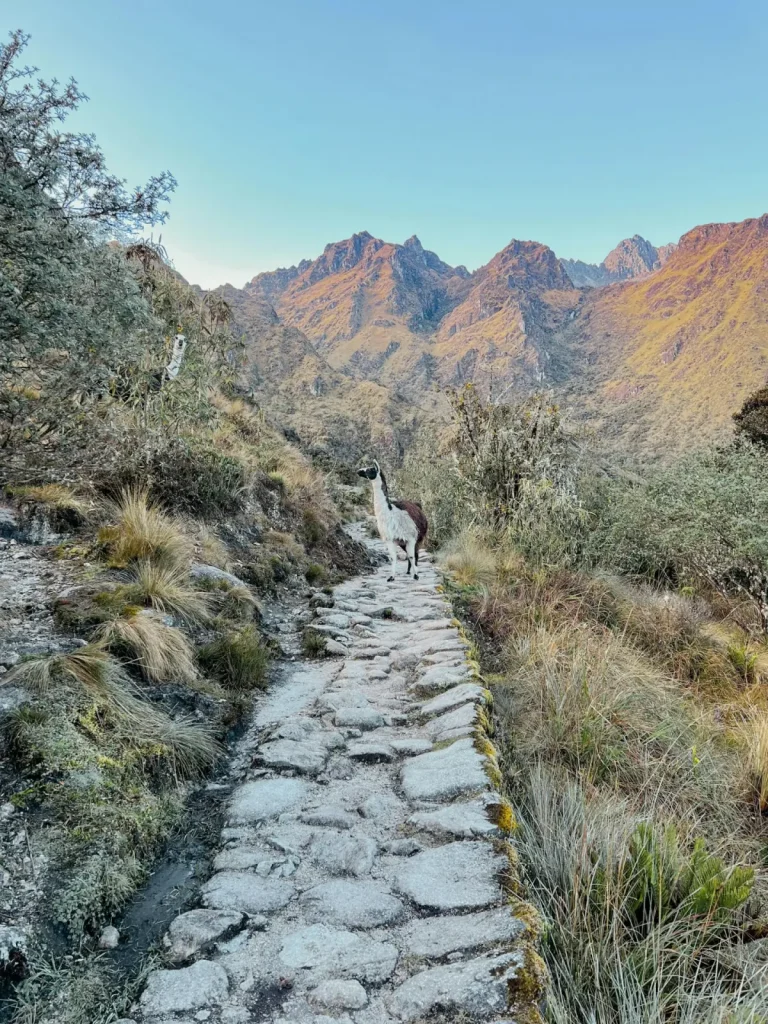
Warmiwañusca, as the pass is called in Quechua, is the high point of the trek at 4,215 m (13,829 ft). From the first camp, the climb can be up to about 1,200 m (3,900 ft) of elevation, much of it on stone steps, in thinner air than most visitors have ever walked in. Almost everyone slows down near the top, and that’s fine: there’s no race, and the guide sets a pace that keeps the group together.
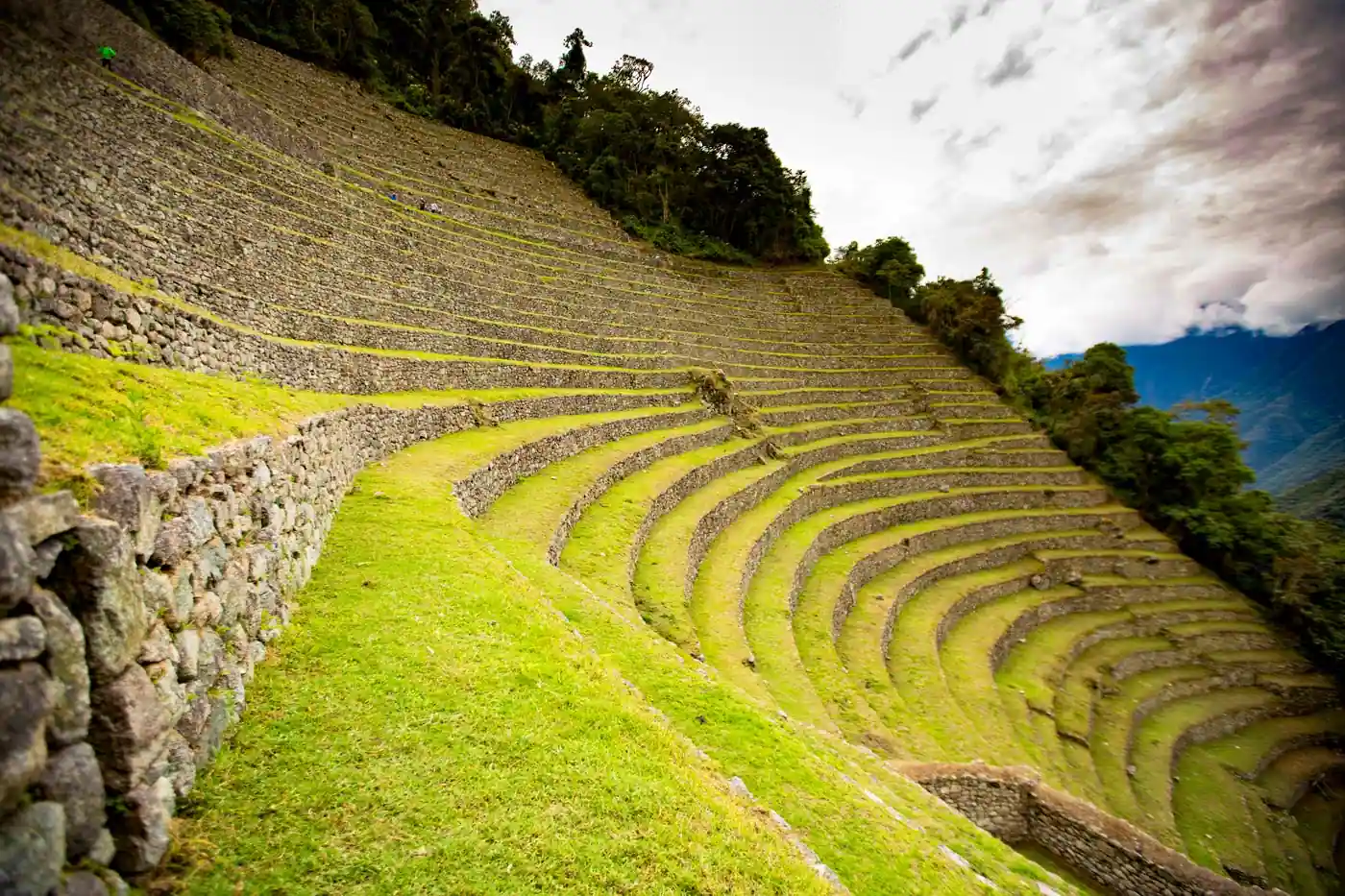
What surprises many hikers is the descent. From the pass, the trail drops steeply on uneven stone to the next camp, and that’s where knees and trekking poles earn their keep. Day three repeats the pattern on a smaller scale, with a long staircase down toward Wiñay Wayna.
Altitude: What You’ll Feel and How to Prepare
Cusco sits at about 3,400 m (11,150 ft), already high enough for most visitors to notice. In the first day or two, many people feel short of breath on stairs, sleep lightly or get a mild headache. On the trail, the only section higher than Cusco is the stretch around the two passes on days two and three; the campsites and the last day are lower.
Altitude affects people differently, and fitness doesn’t protect you from it. What helps is time. U.S. health guidance for travelers at high altitude recommends taking it easy for the first 48 hours: mild activity only and no alcohol. It also suggests talking to a doctor about preventive medication if you’re at higher risk.
For the Inca Trail, that translates into a simple plan:
- Arrive in Cusco at least two full days before the trek; three is better.
- Consider spending your first nights in the Sacred Valley, which is lower than Cusco.
- Keep the first day easy, drink water regularly and eat light meals.
- Talk to your doctor before the trip about altitude medication, especially if you have a heart or lung condition.
- On the trail, tell your guide early if you feel unwell. Symptoms that get worse despite rest are a reason to descend.
Our guide to Cusco’s altitude and acclimatization goes into more detail. It’s general travel information, not medical advice.
An 8-Week Training Plan
You don’t need a gym membership or mountaineering experience. You need legs that are used to climbing and descending, and the stamina to do it several days in a row. If you have a health condition or haven’t exercised in a while, check with your doctor before you start.
| Weeks | Focus | What to do |
|---|---|---|
| 1 and 2 | Build a base | Three brisk walks of 45 to 60 minutes a week, plus two short strength sessions: squats, lunges, step-ups |
| 3 and 4 | Add hills | One longer hike of 2 to 3 hours on hills or stairs each weekend; keep the weekday walks and strength work |
| 5 and 6 | Add weight and back-to-back days | Carry a daypack with 5 to 6 kg (11 to 13 lb); hike on two days in a row; include long descents |
| 7 | Peak week | A long day of 5 to 6 hours with plenty of climbing, followed by a shorter hike the next day |
| 8 | Taper | Keep moving with easy walks; rest your legs before you fly |
A few things make more difference than the exact plan:
- Stairs are your friend. If you live somewhere flat, a stairwell or a step machine is the closest thing to the Inca Trail.
- Train the descent. Walking down steep steps builds the muscles that protect your knees.
- Break in your boots on the long training hikes, with the socks you’ll wear on the trek.
- Practice with your daypack so you know how it feels after several hours.
What a Day on the Trail Feels Like
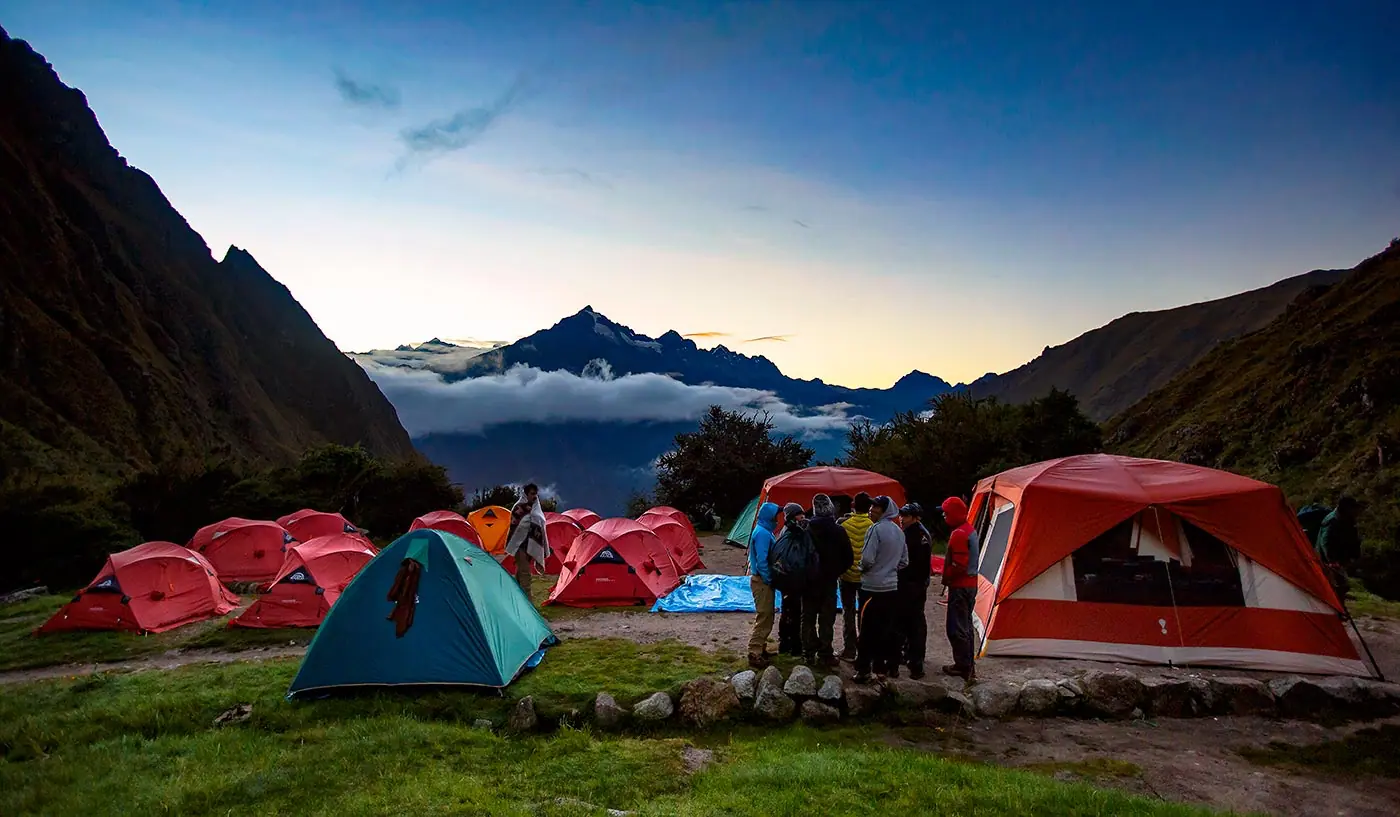
Most days follow the same rhythm. You’re woken early with a hot drink at your tent, pack your daypack while the team takes down camp, and eat breakfast in the dining tent. Then you walk at your own pace, with the guide setting regular stops to rest, drink and explain the sites along the way. Porters overtake you on the path, carrying the camp ahead.
Lunch is a proper hot meal at a midday stop. In the afternoon you continue to the next camp, where the tents are already up. There’s time to wash with a bowl of warm water, rest, and then a snack and dinner before an early night. The cold arrives quickly after sunset at the higher camps.
The pace is steady, not fast. Groups spread out, and faster walkers wait at agreed points. If you’re slower, you’re not holding anyone up: the guide plans the day around the whole group.
Small Things That Make It Easier
- Walk slowly from the start, especially on day two. A pace you can hold for hours beats bursts of speed.
- Use trekking poles on descents, with rubber tips, to spare your knees.
- Treat hot spots before they become blisters.
- Eat and drink regularly, even if the altitude takes away your appetite.
- Carry a warm layer and a rain jacket in your daypack every day, whatever the morning looks like.
- Sleep warm. A good sleeping bag and dry clothes for the night make the next day much easier.
How to Know You’re Ready
A simple test a few weeks before you travel: can you walk for five or six hours with a light pack, including a long climb and a long descent, and feel fine the next day? If yes, you’re in good shape for the Inca Trail. If you finish exhausted or sore, you still have time: add stairs, a weekly long hike and leg strength work, and consider the Short Inca Trail if the four-day route still feels out of reach.
Kids, Teens and Older Hikers
There’s no single right age for the Inca Trail. What matters is experience: how someone handles long walks, cold nights in a tent, early starts and steps that go on for hours.
- Active teenagers who already hike often do very well on the four-day route and remember it for years.
- Younger children usually find the classic route too long, and they’re often less able to tell you how they feel at altitude. For families, the Short Inca Trail or a relaxed trip by train is often a better fit. Our family planning guide covers the options.
- Older hikers complete the trail every season. Steady walkers in good health who train for the descents and take their time acclimatizing are the ones who enjoy it most. Trekking poles are almost essential.
If you’re unsure, tell us about your group’s experience. An honest conversation before booking is better than a hard day on the trail.
Easier Alternatives
If four days sounds like too much, you still have good ways to walk into Machu Picchu or see it without a trek:
- The Short Inca Trail: one full hiking day from Km 104, lower than Cusco, with a night in a hotel. See our comparison of two days or four.
- Machu Picchu by train: no trekking at all, with a guided visit of the citadel. Explore our Machu Picchu tours.
- Sacred Valley and Machu Picchu: a gentle two-day trip that also helps you acclimatize.
From our team
The hikers who struggle most are rarely the least fit. They’re usually the ones who flew into Cusco the day before the trek. Give your body those extra days, and the trail becomes a very different experience.
Frequently Asked Questions
How fit do I need to be for the Inca Trail?
You should be comfortable hiking for several hours on consecutive days, including steep climbs and descents. You don’t need to be an athlete, but some training in the weeks before makes the trek much more enjoyable.
What is the hardest part of the Inca Trail?
Day two, over Dead Woman’s Pass at 4,215 m (13,829 ft), followed by the steep descent to camp. Many hikers also find the long staircases on day three tiring for the knees.
Is the Short Inca Trail easy?
It’s moderate. There are no high passes, but the morning is a steady climb of about 600 m (2,000 ft) on uneven stone, and the whole day is six to seven hours on your feet.
Can I get altitude sickness on the Inca Trail?
Yes, it’s possible, especially near the passes, which are higher than Cusco. Acclimatizing for two or three days first reduces the risk. Tell your guide if you feel unwell, and talk to a doctor before you travel about prevention.
Are there horses or mules to carry me?
No. Pack animals and riding aren’t used on the Inca Trail. Porters carry the group’s equipment, and you walk the whole route.